The Definitive Guide to SEO vs AEO: Key Differences
SEO vs AEO: The Key Difference
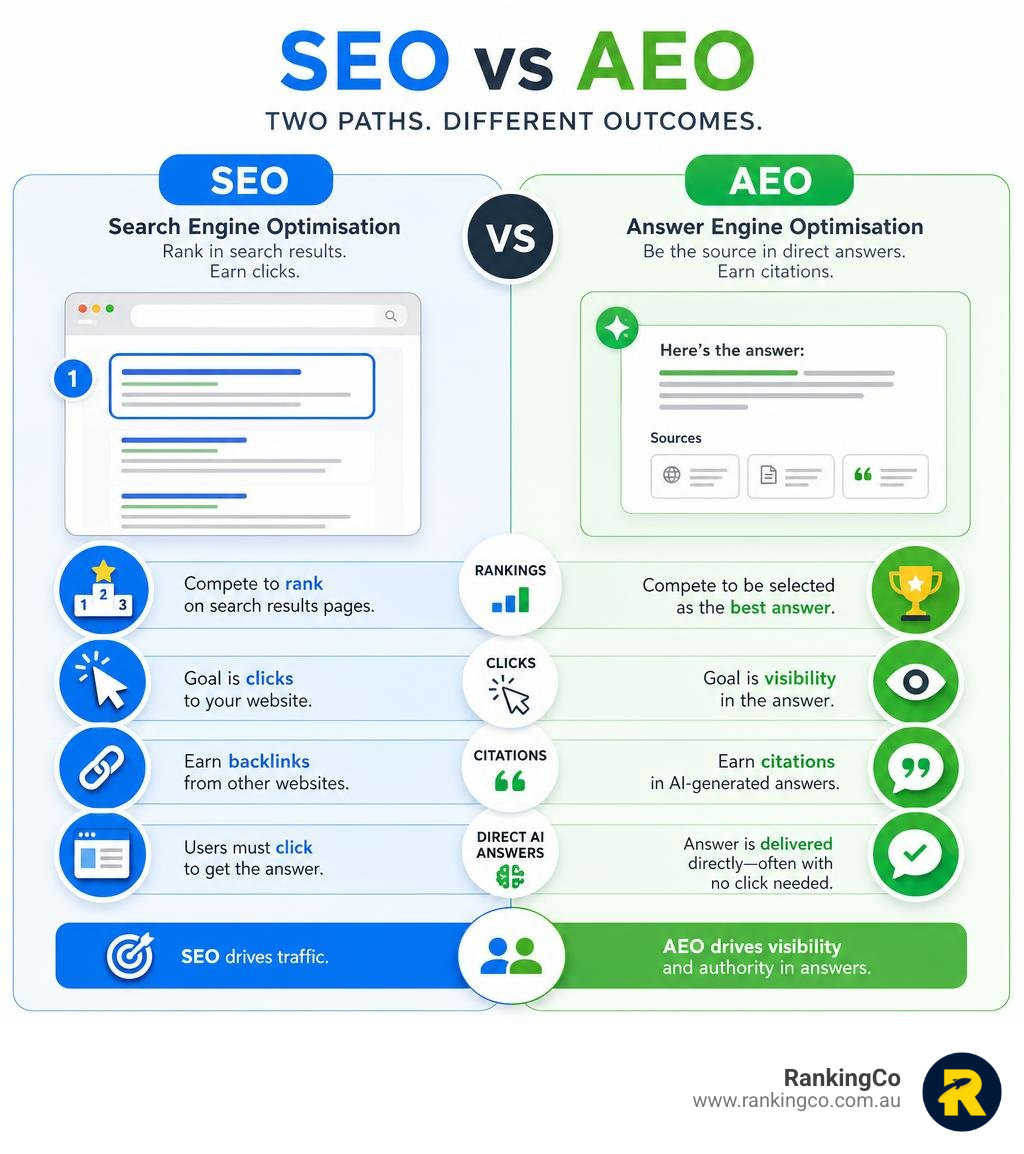
At RankingCo, we help Australian businesses make practical decisions about where to focus their search marketing. The SEO vs AEO difference is straightforward: Search Engine Optimisation (SEO) primarily focuses on improving visibility in traditional search results, while Answer Engine Optimisation (AEO) focuses on making useful information easy for answer systems to surface in direct responses.
SEO helps a website earn impressions, rankings and visits from search engines. AEO applies many of the same foundations to answer-led experiences, where a search platform or AI tool may summarise information and cite a useful source instead of simply presenting a list of links. The two approaches are complementary, not competing. Strong technical SEO, clear page content and credible business information can support both conventional search visibility and inclusion in answer-led search experiences.
I'm Kerry Anderson, Co-founder at RankingCo. For small and medium-sized businesses, the priority is not to chase a separate set of supposed AI-search tricks. It is to publish helpful, accurate pages that answer genuine customer questions, demonstrate experience and make it easy for people and search systems to understand what the business offers.
Key Takeaways
- SEO aims to improve visibility in traditional search results and bring qualified visitors to your website.
- AEO aims to make accurate, useful information easier for answer systems to identify and surface in direct responses.
- SEO provides the technical and content foundation that supports answer-led visibility.
- Start with important service, product and information pages, then improve clarity, evidence, internal links and technical health.
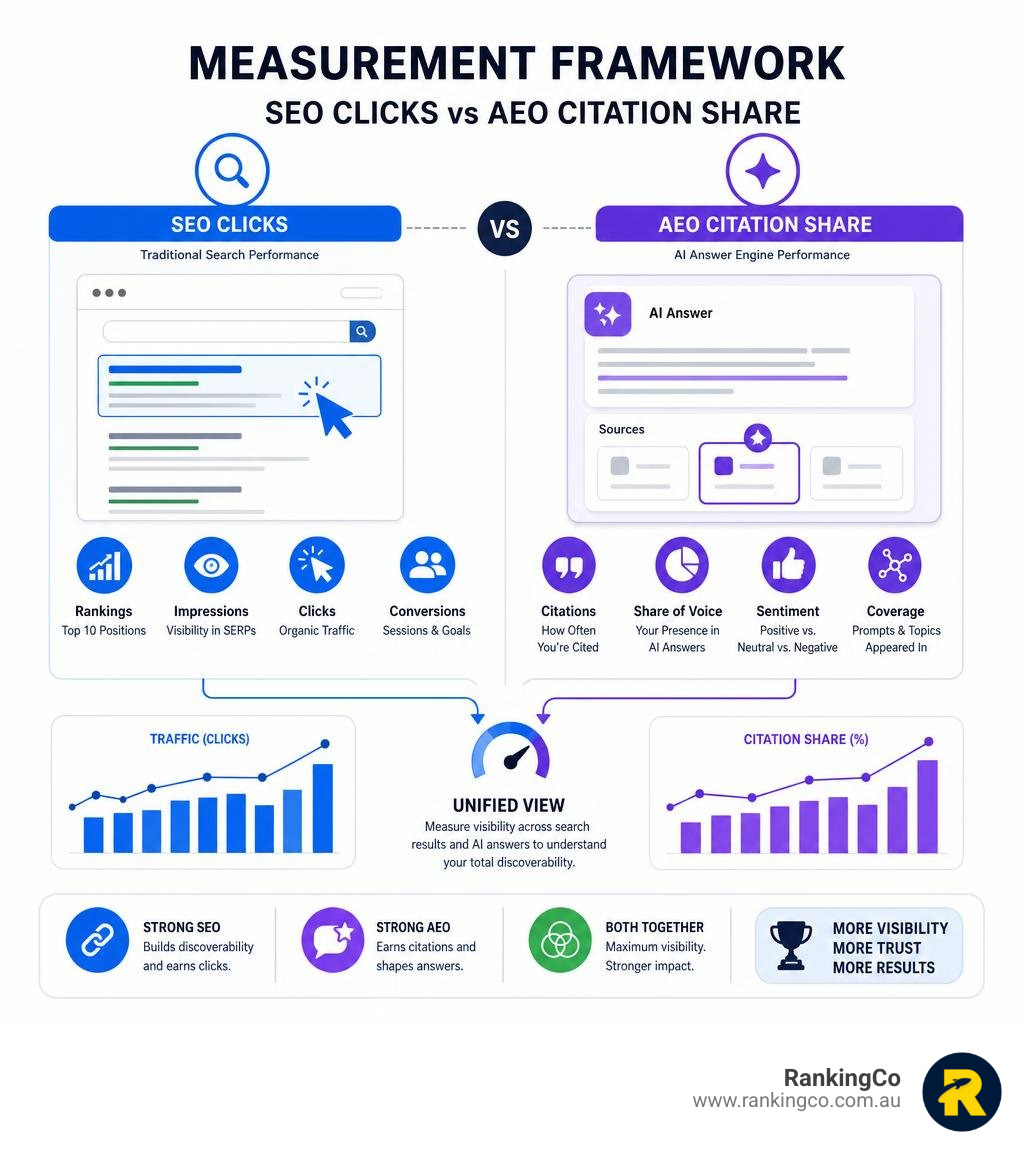
- Measure SEO with rankings, impressions, click-through rate (CTR), traffic and conversions, while AEO also considers cited-page visibility, brand mentions and prompt coverage. Explore our SEO services for help building the right foundation.
How SEO and AEO Work Together
SEO and AEO share a central goal: helping the right people find reliable information when they need it. The difference is the search experience and outcome. SEO is concerned with how well a page can be discovered, crawled, understood and ranked in search results. AEO is concerned with whether the page contains clear, well-supported information that an answer-led experience may be able to surface or cite.
Modern AI search experiences do not work through one fixed technical model. They can combine web retrieval, ranking systems, language models and other platform-specific processes. That means it is misleading to present an inverted index for SEO and vector retrieval for AEO as two entirely separate systems. The exact mechanisms vary by platform, but useful, accessible and trustworthy web content remains essential.
Google’s own guidance for AI features in Search states that there are no additional technical requirements or special schema requirements to appear in AI Overviews or AI Mode. Google recommends the same fundamentals that make content useful in Search: make pages crawlable, satisfy user needs, provide a good page experience and use structured data only where it is relevant to visible content.
Search behaviour is evolving, although the impact differs by audience and query type. In a 2025 Pew Research Center study of Google searches in the United States, users clicked a traditional result less often when an AI summary appeared: 8% of visits with an AI summary included a traditional search-result click, compared with 15% of visits without one. The finding does not mean website traffic will disappear, but it does show why clear information and a recognisable brand matter when people receive answers before deciding whether to visit a source. Read the Pew Research Center analysis for the study context and methodology.
Is AEO Replacing SEO?
No. AEO does not replace SEO because answer systems still need accessible, understandable and credible web content to retrieve and evaluate. SEO supports this by improving technical crawlability, page relevance, internal linking, content quality and the signals that help search engines interpret a page.
AEO changes how businesses think about the content on important pages. Instead of writing only for a keyword match, each page should help a prospective customer resolve a real question. A service page might explain who the service is for, what is included, the relevant considerations and the next step. A comparison page might state the difference early, then provide useful detail and examples. This type of page can improve the reader experience regardless of whether the visitor arrives through a traditional result, an AI-generated citation or a direct referral.
How Does AEO Affect Website Traffic and Measurement?
AEO can affect traffic patterns because a reader may receive enough information within an answer-led interface to delay or avoid a click. It can also introduce a brand to people who would not have found the page through a traditional query. For that reason, it is best assessed alongside SEO rather than as a replacement for organic reporting.
For SEO, monitor organic impressions, rankings, CTR, qualified sessions and conversions. For answer-led visibility, review whether priority pages are cited or mentioned for meaningful customer prompts, whether the brand is accurately represented and whether those touchpoints contribute to enquiries or assisted conversions. A citation alone is not a business outcome, but it can indicate that your content is being recognised as a useful source.
What Businesses Should Prioritise for SEO and AEO
The most effective approach is to strengthen the fundamentals first, then make high-value pages easier to understand and use. For RankingCo clients, that means connecting content decisions to the questions customers ask before they enquire, request a quote or make a purchase.
- Audit technical SEO first. Check that priority pages can be crawled and indexed, load reliably on mobile devices and use clear site architecture. A technical SEO audit can identify issues that make it harder for both people and search systems to access key content.
- Improve important service and product pages. State the primary answer near the beginning, then add supporting context, relevant examples and clear next steps. You do not need artificial word-count rules or rigid content chunking to do this well. Answer important questions clearly and early, then provide the detail a decision-maker needs.
- Respond to genuine customer questions. Build pages and sections around the questions buyers actually ask, such as whether they need SEO and AEO, what changes first, how results are measured and when a specialist review is worthwhile. Clear headings, concise explanations and meaningful comparisons help readers scan the page and find the right answer.
- Strengthen internal linking and first-hand evidence. Link naturally from informational content to relevant services so readers can continue their journey. Support claims with real expertise, transparent explanations, up-to-date information and visible business details rather than vague marketing language. Our SEO content services can help turn high-value customer questions into useful, connected website content.
- Use structured data accurately, not as a shortcut. Structured data can help search engines understand the visible content and entities on a page when it is correctly implemented. It does not guarantee rankings, enhanced appearances or AI citations. Use the markup type that genuinely matches the page, keep it aligned with what readers can see and follow Google’s relevant documentation.
Practical Next Steps
Start by listing the service, product and information pages most likely to influence an enquiry or sale. Review each page for a direct explanation of the customer problem, evidence that supports your advice, a logical internal link to the next relevant page and a clear contact path. Then review how those pages appear in the search experiences that matter to your audience. This creates a practical SEO and AEO programme without relying on unproven optimisation hacks.
SEO and AEO work best together: SEO helps your website become discoverable and trustworthy, while answer-ready content helps customers and search experiences understand the value of each page. If you would like a clearer plan for priority pages and search visibility, RankingCo can help you connect technical improvements, content development and measurable marketing goals.
Frequently Asked Questions About SEO vs AEO Difference

What is the foundational SEO vs AEO difference for online visibility?
SEO focuses on improving a web page’s visibility in traditional search results so it can earn relevant visits. AEO focuses on making the page’s information clear, accurate and useful enough to be surfaced within direct answers or cited by answer-led search experiences. Both depend on content that is accessible, relevant and trustworthy.
Is AEO replacing traditional SEO?
No. AEO builds on SEO rather than replacing it. Search engines and answer-led systems still need to discover, retrieve and evaluate credible pages. Technical health, clear information architecture, useful content and strong page experience remain core priorities.
Can SEO help with AI search visibility?
Yes. SEO can support AI search visibility by making priority pages crawlable, understandable and useful for the intended audience. It cannot guarantee that a platform will cite or surface a page, because each platform determines what sources to use for a given prompt. The best approach is to focus on accurate information, a clear answer to the user’s question and strong website fundamentals.
Do you need both SEO and AEO?
Most businesses should treat AEO as part of a broader SEO and content strategy. Traditional search results still drive discovery and visits, while answer-led experiences may influence research and brand awareness. Prioritise SEO foundations first, then improve the pages that address high-value customer questions.
How does Query Fan-Out affect content planning?
Query Fan-Out describes a process used by some AI systems to explore several related questions behind one broader prompt. For content planning, the useful lesson is not to create artificial sections for every possible variation. Instead, cover the essential questions a customer needs answered, use descriptive headings and provide enough context for the page to stand on its own.
What role does schema markup play in answer engine optimisation?
Structured data can help search engines interpret visible page content and entities, but it is not a guarantee of improved rankings, rich results or AI citations. Use it accurately, ensure it matches what is on the page and avoid adding markup only because it is thought to be an AEO shortcut.
How do success metrics differ between SEO and AEO?
SEO reporting usually focuses on search impressions, rankings, CTR, organic traffic and conversions. AEO reporting may also consider whether priority content is cited or mentioned in answer-led search experiences, how accurately the brand is represented and whether that visibility assists meaningful customer actions. Review both sets of signals in context rather than treating one metric as decisive.




Share online