Performance Max Lead Gen: A Practical Guide to Better-Quality Enquiries
How to Generate Better Leads with Google Performance Max

Google Performance Max can help businesses reach potential customers across Google Ads channels from one campaign. For Performance Max lead generation, the goal is not simply to collect more form submissions. The campaign needs to support enquiries that are relevant to the services offered, likely to progress, and measurable in a way that helps the business make informed decisions.
I am Kerry Anderson, Co-Founder of RankingCo. Our team works with Australian small and medium-sized businesses to make Google Ads activity easier to understand through clear campaign goals, transparent reporting and conversion data that reflects genuine commercial opportunities.
What Makes a Performance Max Campaign Effective for Lead Generation?
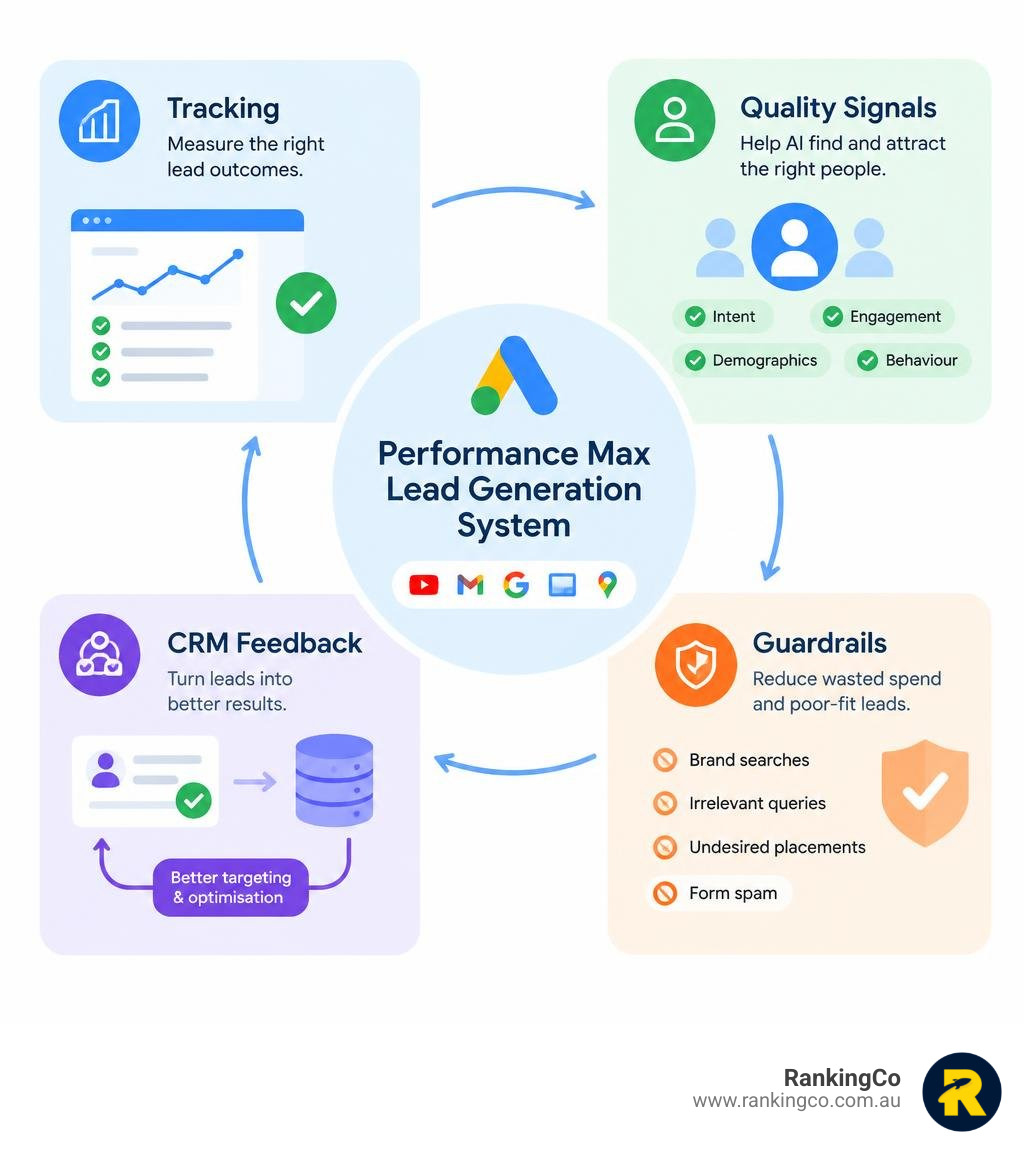
A strong Performance Max lead generation campaign starts with a clear definition of a qualified lead, reliable conversion tracking and landing pages that match the offer in the ads. Google’s guidance on Performance Max best practices for lead generation also emphasises meaningful measurement and clear goals, because automated bidding can only respond to the signals supplied. For hands-on support with campaign setup and lead-quality reviews, explore RankingCo’s Google Ads leads management.
At RankingCo, we view Performance Max as a campaign that requires direction and ongoing review, not a hands-off solution. Results vary according to budget, industry competition, targeting, conversion data, landing-page experience and campaign management. Used alongside a well-managed Search campaign where appropriate, it can support broader discovery while the account retains a focus on lead quality.
Key Takeaways
- Define a qualified lead before choosing campaign goals, so Google Ads is optimising towards enquiries that fit the business.
- Use primary conversion actions for meaningful outcomes and retain secondary actions for observation where useful.
- Connect lead data from forms, calls and customer relationship management (CRM) systems where supported to improve Performance Max lead quality.
- Keep ads, assets and landing pages aligned so prospects understand the service, location and next step before they enquire.
- Review campaign performance alongside sales feedback, then explore Google Ads management services or Google Ads lead management when specialist support is needed.
1. Set Up Performance Max for Lead Quality, Not Just Lead Volume
What Is Google Performance Max for Lead Generation?
Performance Max is a goal-based Google Ads campaign that can show ads across Google’s advertising channels, using automation to help pursue the conversion outcomes selected by the advertiser. It differs from a standard Search campaign, where advertisers have more direct control over keyword targeting and search queries. Performance Max combines assets, audience signals, budget and conversion goals to find opportunities across a broader range of placements.
That reach can be useful for service-based businesses that want to extend beyond active search demand. It also means the campaign needs clear inputs. When the conversion goal is only a basic form completion, the system may favour people who complete forms easily rather than people who are ready to buy. Google’s official Performance Max campaign setup guidance is a useful starting point for selecting the right campaign objective and building the campaign correctly.
Define What a Good Lead Looks Like
Before launching a campaign, agree on the attributes that make an enquiry worthwhile. A qualified lead may need to be within the service area, seeking a relevant service, able to meet the expected budget and ready to speak with the business within a realistic timeframe. The criteria will differ for a Brisbane trades business, a professional service provider and an eCommerce support service.
This definition should be shared by the marketing and sales teams. It provides a practical way to distinguish genuine commercial opportunities from general research, job enquiries, spam and requests outside the business’s scope. It also gives the team a consistent basis for reviewing Performance Max lead quality over time.
Choose the Right Conversion Goals
Choose conversion actions that reflect progress towards a meaningful business outcome. Completed enquiry forms, qualified phone calls, booked consultations and customer relationship management (CRM)-confirmed leads can be useful signals when they are accurately recorded. Primary conversion actions guide bidding, while secondary actions can remain visible for reporting without necessarily steering the campaign.
For example, a service business may record a completed quote request as a primary action once its forms include basic qualification questions. A newsletter subscription or a click to view a contact page may still be useful to observe, but it may not be a strong bidding signal. The right mix depends on how the business qualifies leads and whether the tracking can be maintained reliably. Google’s Google Ads lead generation best practices provide further guidance on building stronger measurement foundations.
Build a Strong Campaign Foundation
Start with a clear campaign objective, a relevant landing page and an obvious next step for the visitor. The landing page should explain the service, location coverage and contact process without forcing prospects to search for key details. Conversion tracking must also be tested before the campaign is judged on performance.
Audience signals can provide Google Ads with useful starting information, such as existing customer lists, high-intent website visitors or people who have engaged with relevant services. They are guidance for the system rather than a guarantee that ads will only reach those people. Keep the initial setup focused on the services and audiences that matter most, then use performance and lead feedback to decide what needs refinement. Google’s Google Ads campaign creation guidelines can help teams review the essential campaign setup steps.
2. Improve Performance Max Lead Quality Through Better Data and Creative
Get Conversion Tracking Right
Reliable tracking connects advertising activity with the actions that matter to the business. Google Ads conversion tracking can record actions such as form submissions, phone calls and booked appointments. Google Analytics can also provide useful on-site context where it is configured appropriately. For businesses that capture lead details with consent, enhanced conversions for leads and offline conversion imports may help connect an ad interaction with a later qualified outcome.
Implementation requirements vary by website, customer relationship management system and consent process. The priority is data quality: track the right action, avoid duplicate recordings and make sure the data is available early enough to support decisions. Businesses should review their privacy notices and data handling practices and seek independent legal advice where needed.
Feed Better Lead Data Back into Google Ads
A CRM can help marketing teams identify whether an enquiry became a qualified opportunity, progressed to a consultation or resulted in a sale. Where Google Ads supports the setup, importing these offline outcomes can give automated bidding a better indication of which leads have business value.
Tracking every form submission as an equal success can obscure this difference. A simple form may generate a higher volume of responses, but the marketing team still needs to know whether those responses fit the service, location and budget criteria. Feeding back qualified outcomes helps the account assess performance against lead quality rather than volume alone.
Create Relevant Assets That Attract the Right Customers
Performance Max assets should accurately reflect the offer. Use clear headlines, practical descriptions, relevant images and original video where available. Explain the service benefit, the audience it suits and the action a prospect can take next. Consistent messaging makes it easier for people to recognise whether the offer matches their needs before submitting an enquiry. RankingCo’s Performance Max asset guidance can help businesses review messaging and creative choices in the context of broader campaign management.
Asset groups can support different services, locations or customer needs when the structure remains manageable. Avoid creating unnecessary complexity before the team has enough reliable data to learn from it. Review asset performance alongside lead feedback, not as a substitute for it. For assistance connecting creative decisions with lead-quality goals, see RankingCo’s Google Ads leads management.
Match Landing Pages to the Campaign
The landing page should deliver on the promise made in the ad. It needs concise service information, a visible contact option, a mobile-friendly layout and a form that gathers enough detail to help the team assess the enquiry. Requiring appropriate details, such as service type, location or project timeframe, can help reduce unsuitable submissions without making the form unnecessarily difficult to complete.

RankingCo’s landing page service can support businesses that need pages designed around clear messaging, conversion tracking and lead-generation goals.
3. Optimise Performance Max Campaigns for Sustainable Lead Generation
Review Lead Quality Alongside Campaign Performance
Cost per lead is useful, but it does not tell the whole story. Review it alongside the proportion of enquiries that meet the qualification criteria, the cost of those qualified leads, conversion rate and eventual sales outcomes where the business can track them. This makes it easier to see whether changes are improving commercial value or simply increasing the number of enquiries.
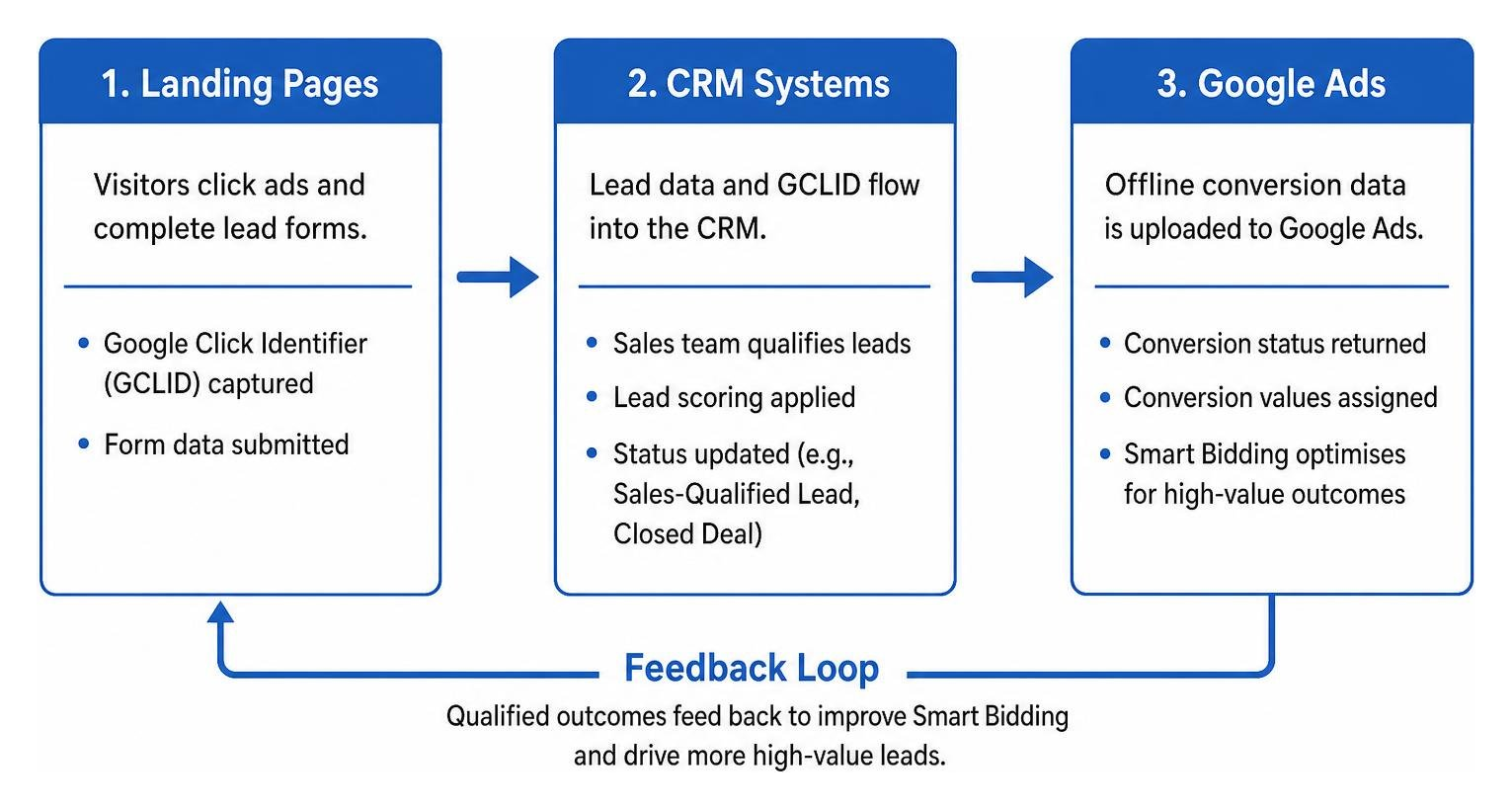
The best review process is a regular conversation between the people managing the campaign and the people speaking to leads. Sales feedback can reveal patterns that do not appear in platform reporting, such as repeated requests for an unavailable service or enquiries from outside the target area.
Give Automated Bidding Useful Signals
Automated bidding relies on the conversion goals and values available to it. If the account has dependable information about different lead stages, assigning appropriate relative values can help distinguish a high-intent enquiry from a less meaningful action. Target cost per acquisition or target return on investment (ROI) settings may be useful only when the campaign objective, conversion data and budget can support them.
Avoid changing targets frequently in response to short-term movement. Check that tracking is correct before changing bids, assets or targeting. Automated systems need consistent signals, and abrupt changes can make it harder to interpret why results have shifted.
Troubleshoot Common Performance Max Lead Generation Problems
High enquiry volume with poor lead quality often indicates that the conversion goal is too broad, the landing page does not qualify visitors clearly enough or the CRM feedback is not reaching the campaign. Start by reviewing the lead definition and the actions selected for bidding.
Low conversion volume may point to limited demand, a restrictive offer, an unclear landing page or tracking that is not firing properly. Verify the tracking first, then review the campaign’s service messaging, assets and landing-page experience before making sweeping changes.
Irrelevant enquiries can signal a mismatch between the offer and the audience reached. Clarify the service, location and eligibility criteria in the ads and landing page, then review exclusions and form questions where appropriate. Inconsistent tracking should be resolved before performance conclusions are drawn, because incomplete data can lead to the wrong optimisation decisions.
Know When to Review or Restructure a Campaign
Review Performance Max over a meaningful period that reflects the business’s buying cycle and expected lead volume. Daily fluctuations rarely explain whether a campaign is succeeding or failing. A considered review of conversion tracking, lead quality, spend, assets and landing pages will usually provide more useful direction than frequent reactive changes.
RankingCo’s approach to Google Ads management is collaborative: we work with businesses to clarify campaign strategy, review practical lead feedback and report on the measures that support informed decisions. Results vary based on budget, industry competition, targeting, conversion data and the changes made over time. Businesses can explore Google Ads Performance Max management, review our services, or contact RankingCo for tailored support.
Practical Next Steps
A practical Performance Max lead generation plan begins with the information already available in the business. Review the enquiries the team receives, identify which ones become worthwhile opportunities and write down the common characteristics. This creates a useful reference point for choosing conversion goals, improving forms and briefing the people managing the campaign.
Next, audit the measurement setup. Check that forms, calls and appointment requests are tracked once and attributed consistently. If the business uses a CRM, establish a process for recording whether a lead was qualified, progressed or closed. This does not need to be complex at the outset, but it does need to be consistent enough to support better decisions.
Then review the customer journey from ad to landing page. The service, location, offer and contact process should be easy to understand. If the campaign is attracting unsuitable enquiries, clarify the qualification details in the ad and form before assuming the campaign needs a larger budget or a completely different audience.
Finally, make changes methodically. Review lead feedback, conversion tracking and campaign performance together, then adjust one meaningful area at a time. This approach helps a business understand what is influencing lead quality and avoids drawing conclusions from short-term fluctuations.
Make Performance Max Work Towards Better Business Outcomes
Performance Max lead generation is most useful when the campaign is built around qualified leads, accurate conversion data, relevant creative and ongoing optimisation. RankingCo works with Australian small and medium-sized businesses to connect Google Ads activity with practical commercial goals through collaborative strategy, transparent reporting and considered campaign management. Results vary according to budget, industry competition, targeting, conversion data and external factors. Our broader support includes Google Ads management services, SEO services, conversion-focused landing pages and Meta Ads when those channels suit the business’s goals.
- Contact RankingCo to discuss campaign goals and lead-generation challenges.
- Explore Our Services for broader digital marketing support.
- Learn more about Google Ads lead management for specialist lead-generation campaign support.
Performance Max Lead Generation: Frequently Asked Questions for Australian Businesses
Is Google Performance Max Good for Lead Generation?
Google Performance Max can suit lead generation when the business has clear conversion goals, reliable tracking and a way to review the quality of enquiries. Its broader reach may help advertisers find prospective customers across Google’s channels, but results depend on the signals provided, the relevance of the offer, the landing-page experience, budget, industry competition and campaign management.
How Can I Reduce Low-Quality Leads From Performance Max?
Start by defining a qualified lead and aligning the primary conversion action with that definition. Clear service information, location details and sensible form questions can help prospects decide whether the offer suits them before they enquire. CRM feedback and offline conversion tracking can also help the account assess which enquiries progress beyond an initial form submission.
Does Performance Max Work for Small Businesses?
Performance Max may work for small businesses when the campaign has a clear purpose, an appropriate budget, useful conversion tracking and realistic expectations. Smaller accounts benefit from keeping the setup focused, using clear service messaging and reviewing lead feedback consistently. A tightly managed Search campaign may also remain valuable for high-intent queries.
How Long Does It Take to Optimise a Performance Max Lead Generation Campaign?
Timing varies with conversion volume, data quality, budget, industry and the number of changes made to the campaign. It is generally more useful to assess Performance Max after enough relevant lead data has been collected than to react to daily movement. Before making major changes, confirm that conversion tracking is accurate and that the sales team is recording lead quality consistently.
Can I Use Performance Max Alongside Standard Search Campaigns?
Yes. Search and Performance Max can serve different roles in a Google Ads account. Search campaigns provide direct control over high-intent keyword targeting, while Performance Max can support broader reach across Google’s channels. Review both campaign types in the context of their contribution to qualified leads and business outcomes rather than comparing only click or form-submission volume.
Should I Optimise Performance Max for Form Submissions or Qualified Leads?
Where reliable data and supported integrations are available, optimising towards qualified leads is usually more closely aligned with business value than treating every form submission as equal. Form submissions can still be a useful starting point, particularly when an account is new, but the campaign should evolve as the business improves its ability to identify and return meaningful lead outcomes to Google Ads.



Share online