7 Key Factors to Review Before Hiring Local SEO Marketing Services
Local SEO Services for Small Businesses: 7 Factors to Review Before Hiring

Choosing local SEO services for a small business is a commercial decision, not simply a marketing task to outsource. Before you sign an agreement, you need to know what the agency will actually do, who will manage your Google Business Profile, how it will protect the accuracy of your business information, and whether its reporting connects activity to meaningful enquiries.
At RankingCo, we recommend assessing a prospective agency against a clear set of practical checks. This guide explains what to review in the scope of work, Google Business Profile management, citations, reviews, local content, reporting, and broader digital marketing expertise, so you can compare providers with greater confidence and ask better questions before committing.
Key Takeaways
- Ask for a clear monthly scope of work, including technical improvements, local content, citation maintenance, and reporting.
- Confirm who is responsible for your Google Business Profile and how profile changes, updates, and customer interactions are managed.
- Check how the agency audits business listings, requests reviews ethically, and responds to inaccurate information.
- Look beyond ranking reports and ask how calls, form submissions, bookings, and other relevant enquiries are measured.
- Choose an approach that supports your wider growth plan, including SEO services, paid media, and website improvements where appropriate.
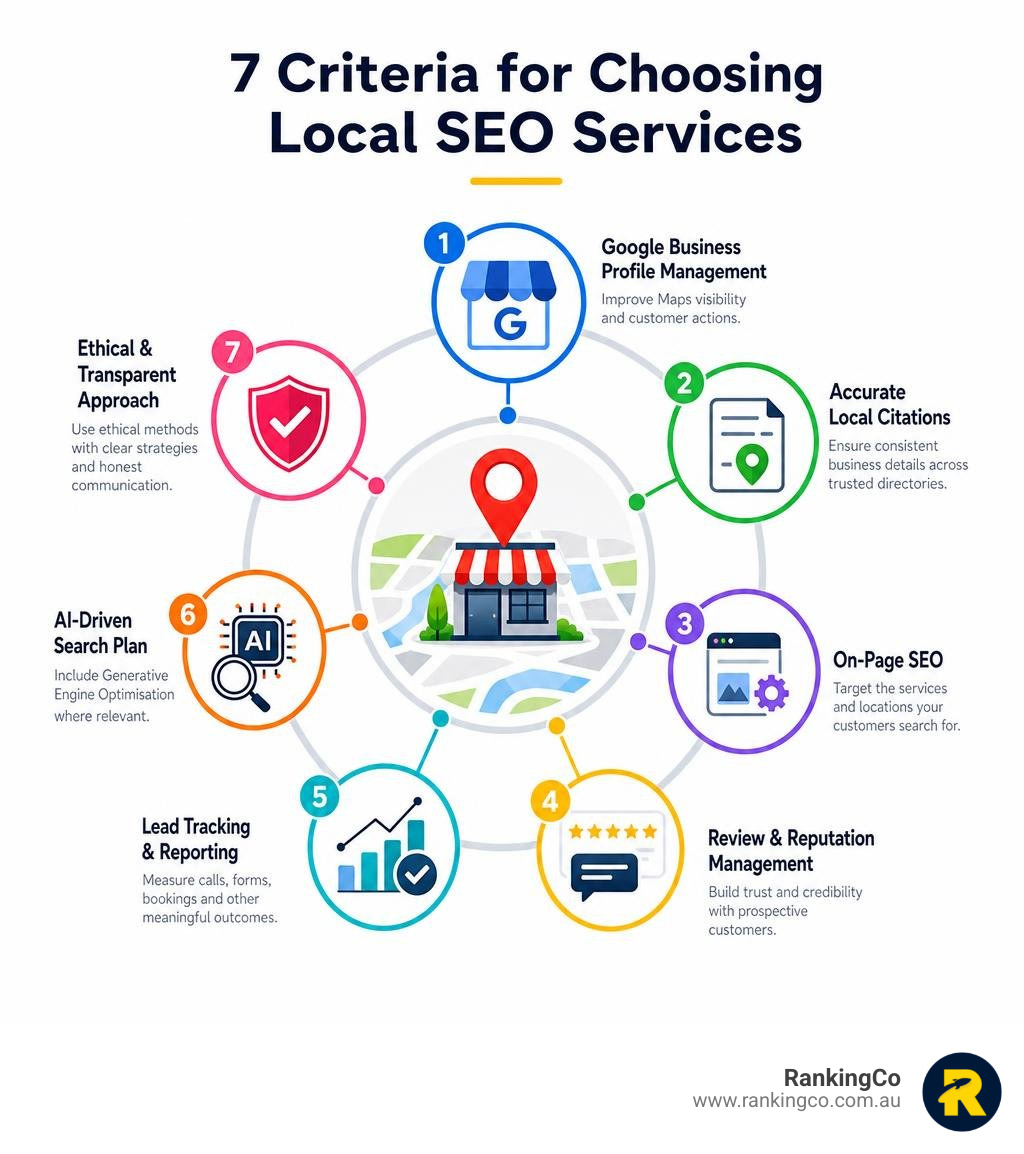
7 Essential Criteria to Evaluate Local SEO Services for Small Businesses
Selecting an agency to manage your local online presence should involve more than comparing a list of inclusions. You are assessing whether its process fits your services, locations, customers, and commercial goals. Use the questions below to make each conversation more specific and to distinguish a defined strategy from broad promises.
1. Transparent Deliverables and Proven Technical Methodologies
A reliable scope should show what work will be completed, why it matters, and how priorities will be set. This may include technical audits, on-page improvements, location and service content, internal linking, and ongoing maintenance. Clear deliverables make it easier to see whether the proposed work matches the needs of your website instead of leaving you with a vague monthly retainer.
Questions to ask: What exactly is included each month? Which technical issues will be prioritised first? What work is completed by the agency, and what input or approvals will be required from our team?
2. Comprehensive Google Business Profile (GBP) Management
Your Google Business Profile is an important place for customers to find and assess local business information in Google Search and Maps. A provider should maintain accurate business details, appropriate categories, services, opening hours, photos, and other relevant profile content in line with Google's Business Profile guidelines. These activities can help keep information useful and consistent for customers, but no individual profile update guarantees a particular local search position.
A sound process should also set out who can make changes, how updates are approved, and how suggested edits, customer questions, and profile issues are handled. This protects the accuracy of information that customers may rely on when deciding whether to contact your business.
Questions to ask: Who manages our Google Business Profile day to day? How will you keep our categories, service information, opening hours, and photos accurate? How will you handle suggested edits, customer questions, and profile issues?
3. Rigorous Citation Building and NAP Consistency
Citations are references to your business name, address, and phone number across directories, map platforms, and other relevant online listings. Keeping this information accurate can help customers and platforms identify the correct business and reduce the risk of conflicting details, such as an outdated phone number or old address.
A practical local SEO process identifies the listings that matter to your business, corrects inaccurate records where possible, and avoids indiscriminate submissions to low-quality directories. Citation work should be treated as business-information maintenance, not as an automatic method for improving rankings.
Questions to ask: How are citations audited? Which listings will be corrected or created, and why are they relevant to our business? How will you identify duplicate or inaccurate business records?
4. Strategic Review and Reputation Management
Reviews can influence whether a prospective customer contacts you, so the process should protect authenticity and customer privacy. A useful strategy helps your team request genuine feedback at an appropriate point in the customer journey and respond professionally to both positive and negative comments. It should never rely on misleading incentives, fake reviews, or pressure tactics.
Questions to ask: How are reviews requested and handled? Who drafts or approves responses? How will the process comply with our privacy obligations and the platforms we use? For legal obligations affecting your business, seek independent legal advice.
5. Alignment with Generative Engine Optimisation (GEO)
Generative Engine Optimisation (GEO) considers how a business may be understood in AI-driven and conversational search experiences. AI-powered systems can draw on information from a range of sources, so the most useful approach is to make your business information clear, accurate, and consistent across the places customers and search systems may encounter it.
In practice, this can include helpful website content that answers real customer questions, current service and location information, authentic reviews, and reputable third-party references. These foundations may support how a business is understood online, but they do not ensure inclusion, citation, or visibility in any individual AI-generated answer. GEO activity should be reviewed over time as the available evidence and search experiences evolve.
Questions to ask: How will the strategy adapt to our locations and services? What steps will improve the clarity of our business information across our website and local profiles? How will you explain the difference between local SEO activity and GEO-focused work?
For a joined-up approach, local SEO should support your broader SEO services strategy rather than operate as an isolated activity.
6. Focus on Lead Tracking and Real Commercial Outcomes
Visibility is only useful when it supports the outcomes that matter to your business. A monthly report should explain completed work, changes in relevant visibility, and how enquiries are being measured. Depending on your goals, that could include phone calls, form submissions, booked appointments, quote requests, or online sales. The agency should also be able to explain the limitations of attribution instead of presenting assumptions as certainty.
Questions to ask: What does the monthly report actually measure? How are calls, form submissions, bookings, and other enquiries tracked? Which outcomes will be used to judge whether the strategy is supporting our goals?
7. Industry Knowledge and Cross-Channel Expertise
Local search does not sit apart from the rest of your marketing. Your website, paid campaigns, social media, landing pages, and analytics can all affect the customer journey after someone finds your business. The right partner should understand where local SEO fits, communicate in practical terms, and recommend other channels only when they support a clear objective.
Questions to ask: How does local SEO fit with our current marketing activity? When would you recommend changes to our website, Google Ads, or social media? Who will explain priorities and results in language our team can use?
Core Deliverables to Expect from Local SEO Services for Small Businesses

A well-defined local SEO engagement should translate these questions into a documented plan. Before proceeding, ask for the proposed deliverables, responsibilities, reporting process, and review points in writing. That gives both your business and the agency a shared basis for measuring progress and adjusting the work as your services, locations, or priorities change.
Typical deliverables may include:
- Technical and local audits to identify website, indexation, mobile usability, and local visibility issues.
- Structured data and on-page improvements that help search engines understand your business, services, and locations.
- Useful local service content designed to answer customer questions without thin or repetitive copy.
- Citation and profile maintenance to support accurate business information across relevant platforms.
- Ongoing reporting and refinement based on the activities completed and the enquiries that matter to your business.
A useful local SEO partnership should leave you with clear deliverables, ethical optimisation practices, local knowledge, transparent reporting, and a strategy connected to your wider business goals. RankingCo supports small and medium-sized businesses with practical SEO services, including Technical SEO and Onsite SEO, where those services are relevant to the opportunities identified.
If you would like a clearer view of the work your business may need, you can contact RankingCo to discuss your locations, services, and goals, or explore Our Services to see how SEO can fit alongside your broader digital marketing activity.
Frequently Asked Questions About Local Search Marketing

What Should a Local SEO Agency Include in Its Monthly Service?
A local SEO service should set out its planned work clearly rather than relying on broad promises. Depending on your business and priorities, this may include technical website improvements, on-page updates, Google Business Profile management, local content, citation maintenance, review guidance, and reporting. Ask the agency to explain what is included, how work will be prioritised, and what approvals or information it will need from your team.
What Should I Ask a Local SEO Agency Before Signing a Contract?
Ask how the agency will understand your services, locations, customers, and business goals before recommending work. It is also sensible to ask who will manage your Google Business Profile, how results will be reported, how content and listing changes are approved, and what happens if priorities change. A clear answer should describe a practical process, responsibilities, and review points without guaranteeing a particular ranking or commercial outcome.
How Can I Tell if a Local SEO Agency Is Actually Doing the Work?
A transparent provider should report the work completed, the reason for it, and the next priorities. Look for evidence of useful activity, such as audited issues, implemented website improvements, maintained business information, content updates, and documented recommendations. Reporting should give enough context for you to understand what has changed and how it relates to your agreed objectives, rather than relying only on a ranking screenshot.
What Should a Local SEO Report Include?
A useful report should cover completed work, relevant visibility trends, website or profile issues being addressed, and the enquiries or conversions being measured. Depending on your goals, this could include calls, form submissions, booked appointments, quote requests, or online sales. It should also explain the limits of attribution and identify the next actions, so you can make informed decisions with the agency.
Can a Small Business Do Local SEO Without an Agency?
A small business can manage some local SEO activities internally, particularly keeping business details current, responding to customers, gathering genuine reviews, and maintaining useful website content. An agency may be helpful when the work requires more structured technical analysis, ongoing content planning, website changes, reporting, or coordination across several locations. The best approach depends on your internal time, capability, and the complexity of your marketing goals.
What Information Does an SEO Agency Need From My Business?
An agency will usually need accurate information about your services, locations, customers, points of difference, website access arrangements, current marketing activity, and the enquiries that matter most to your business. Sharing this information helps shape a strategy around real commercial priorities instead of generic recommendations. If you provide customer data or access to business systems, ensure the process aligns with your privacy obligations and seek independent legal advice where required.
How Long Does It Take to See Measurable Results from Local SEO?
SEO timelines vary considerably depending on competition, website condition, location, authority, and the work being implemented. Some changes may become visible relatively quickly, while building stronger and more consistent organic visibility can take considerably longer. A responsible provider should explain what it is measuring, review progress over time, and avoid presenting estimated timing as a guarantee.
For support assessing a proposed scope or building a practical local search plan, contact RankingCo or explore Our Services, including our SEO services.





Share online