
Stop Wasting Ad Spend with This Complete Ecommerce Marketing Strategy Guide
Stop Wasting Ad Spend with This Complete eCommerce Marketing Strategy Guide

ECommerce businesses can invest heavily in Google Ads, Shopping ads and paid social campaigns without seeing profitable sales. Reducing wasted ad spend starts with aligning campaigns to business goals, reaching relevant audiences, sending shoppers to useful product pages, tracking purchases accurately and reviewing performance consistently. The goal is not to eliminate every unproductive click, because testing and market changes are part of advertising, but to make better decisions with the evidence available.
I am Kerry Anderson, Co-Founder of RankingCo. Our team works with Australian businesses to connect advertising activity, website performance and reporting so marketing decisions are based on commercially meaningful outcomes rather than platform metrics alone.
Key Takeaways
- Audit search terms, audiences, product groups and landing pages before increasing budget.
- Measure Return on investment (ROI), Return on Ad Spend (ROAS), cost per acquisition, conversion rate and average order value alongside product margin.
- Match Google Ads, Shopping ads and remarketing to a clear customer intent and product priority.
- Improve Conversion rate optimisation (CRO) on product and checkout pages so more relevant visits have a reasonable path to purchase.
- Use a connected eCommerce marketing strategy that brings paid advertising, Search Engine Optimisation (SEO) and customer retention activity together.
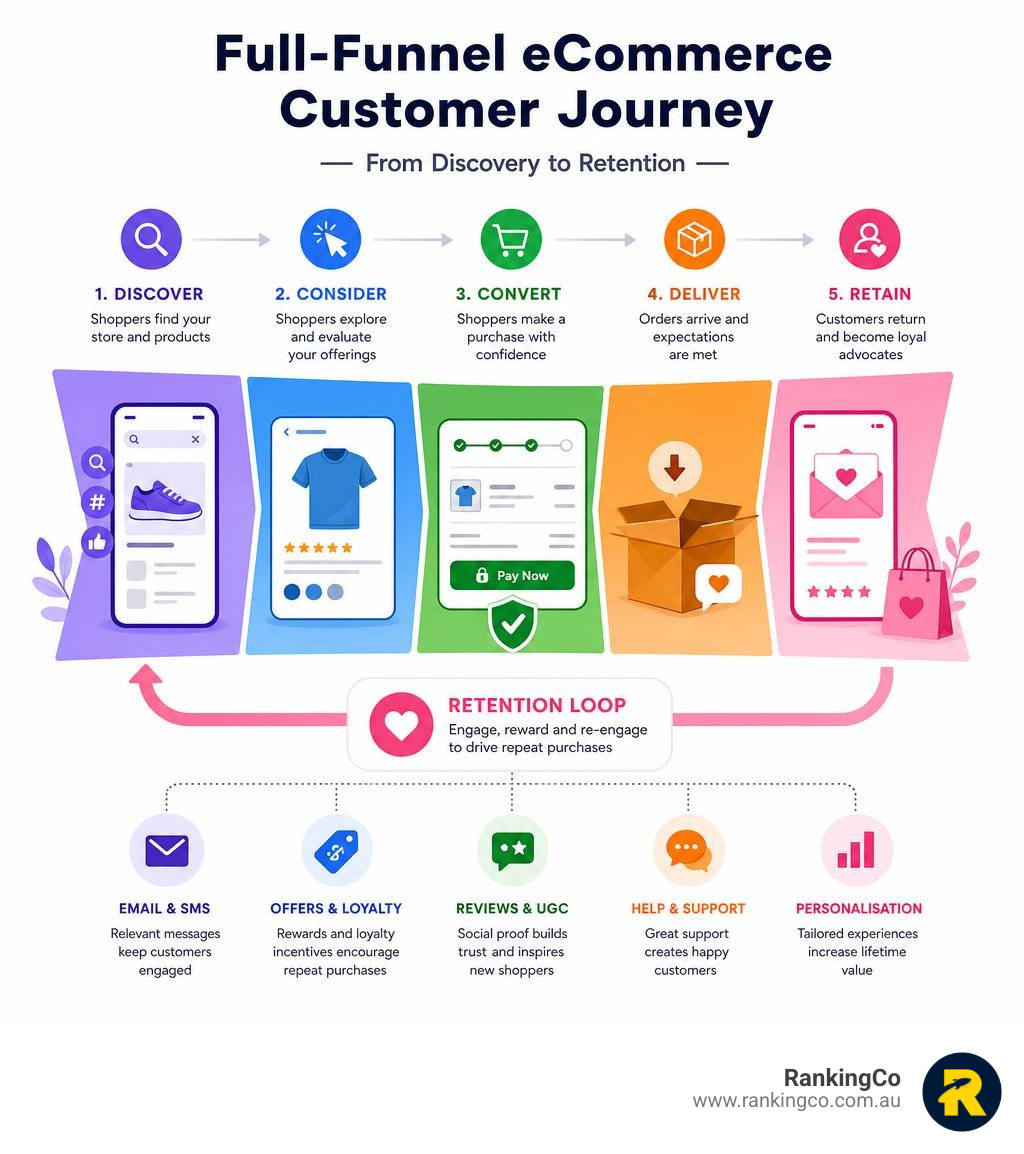
A more effective eCommerce marketing strategy does not treat advertising as a separate activity from the rest of the store. Product information, availability, delivery expectations, checkout experience and follow-up messaging all influence whether an advertising click becomes revenue that supports the business.
1. Identify What Is Wasting Your eCommerce Ad Budget
Before changing bids or adding budget, identify where the advertising journey is breaking down. A campaign can appear busy while attracting searches with weak buying intent, showing products that do not support margin goals or directing visitors to pages that make purchasing difficult.
Common Reasons eCommerce Ads Underperform
Irrelevant search terms, broad audience settings and overlapping campaigns can use budget without bringing suitably qualified shoppers. The same is true when a campaign promotes low-margin items, products that are frequently unavailable, or offers that do not match the landing page. In paid social advertising, an engaging creative asset may generate attention without creating a clear reason to visit or buy.
Remarketing also needs a defined purpose. Showing the same message repeatedly to recent purchasers, excluding people who have already completed the relevant action, or using a long audience window without considering the buying cycle can reduce relevance. Review campaign structure before assuming the platform is the only issue.
Which Metrics Reveal Wasted Ad Spend?
Return on Ad Spend (ROAS) compares advertising revenue with advertising cost. Cost per acquisition shows the cost associated with a defined conversion, while conversion rate indicates how often a relevant visit completes that action. Average order value adds useful context because a campaign that attracts larger orders may have different economics from one that creates many smaller orders.
These metrics are useful signals, not a complete profitability statement. ROI considers the broader commercial picture, including product margin, fulfilment, shipping, returns, discounts and other operating costs. For example, a campaign may report strong ROAS but still leave little contribution after the costs of selling and delivering the product are considered. Decide what a sustainable outcome looks like for each product group before labelling performance as successful.
How to Audit Your Existing Campaigns
Start with purchase tracking, conversion values and duplicate events. If tracking is incomplete or inconsistent, reports may point to the wrong conclusion. Then review search terms, audience performance, product groups, budget allocation and the product pages connected to each campaign. Look for patterns such as spend concentrated on low-intent queries, repeated clicks without product engagement, or high interest in products that are not ready to convert.
Separate a genuine inefficiency from a normal testing period. New creative, a seasonal sale, an inventory change or a campaign learning period can temporarily shift performance. Document the hypothesis, change one meaningful variable at a time and assess results against the business goal rather than reacting to a single day of data.
2. Build an eCommerce Marketing Strategy That Makes Every Dollar Work Harder
Align Google Ads and Shopping Campaigns with Business Goals
Google Ads for eCommerce works best when campaign priorities reflect what the business can profitably sell. Group products around meaningful differences such as margin, availability, seasonality, price point or customer intent. Match keywords and ad messaging to the product being promoted, then review search terms regularly to identify queries that are not relevant to the offer.
Shopping ads depend on accurate product information. Check product titles, images, pricing, availability and descriptions so shoppers are less likely to encounter a mismatch after clicking. A well-managed feed does not guarantee performance, but it gives campaigns clearer inputs and gives shoppers more consistent information. Our Google Ads eCommerce Management service helps businesses review these moving parts as part of a practical advertising plan.
Improve Audience Targeting and Remarketing
Audience signals and remarketing can support more relevant eCommerce advertising when they are built around real customer behaviour. Separate new customer acquisition from campaigns designed to encourage repeat purchases or bring back visitors who viewed a specific category. Use exclusions where appropriate so a campaign is not repeatedly targeting people who have already bought the promoted item.
Meta Ads can help create demand and re-engage shoppers, but creative, campaign objective and audience selection should support the same commercial goal. Test messages that explain the product benefit, show the product in context and set realistic expectations about delivery or availability. Avoid assuming that every visitor has the same intent or that a larger audience will always produce better-quality sales.
Turn More Ad Clicks into Sales
Advertising cannot compensate indefinitely for a confusing store experience. Product pages should make the next step clear with accurate product details, useful images, transparent delivery and return information, and an uncomplicated route to checkout. Mobile usability matters because customers often research and purchase across several devices.
CRO is the process of improving the store experience so more suitable visitors complete a valuable action. Start with a clear issue, such as unclear delivery information or an unnecessary checkout field, then test one meaningful improvement at a time. Changes should be reviewed against conversion quality and profitability, not simply clicks. A purpose-built eCommerce website can support stronger product discovery, trust and checkout usability.
Coordinate Paid Advertising with SEO and Other Marketing Channels
Paid advertising and SEO serve different roles in an eCommerce marketing strategy. Paid campaigns can help a business reach prospective customers for priority products, while SEO can support longer-term visibility for category and product searches. Consistent product information, landing-page messaging and customer questions make both channels more useful.
The right mix depends on margin, competition, buying cycle, inventory and growth goals. Email, SMS and review requests can also support retention after the first purchase. RankingCo's eCommerce SEO services can help align technical foundations and content with the same customer journey that paid campaigns are designed to support.
3. Measure, Optimise and Scale Your eCommerce Advertising

Set Up Reliable Conversion Tracking
Reliable conversion tracking is the starting point for paid advertising optimisation. Review whether purchases are recorded once, values are passed accurately and the platform is receiving the event that matters to the business. Check attribution settings and compare reports carefully, because Google Analytics and advertising platforms may assign credit differently.
When reports disagree, investigate the setup before making major budget changes. Confirm that purchase events, product values and transaction identifiers are working as expected, then use the reports as complementary views rather than competing answers.
Test Campaign Changes and Allocate Budgets Carefully
Prioritise the areas with the clearest potential impact, such as search terms that do not match the product, product groups with limited availability, audiences with weak conversion quality or landing pages that create friction. Give each test a specific objective and avoid changing targeting, creative, bidding and the landing page at the same time.
Reduce spend when the evidence shows a campaign is repeatedly attracting unsuitable traffic or cannot support the required margin. Continue testing when the campaign has a credible hypothesis, sufficient data and a clear route to improvement. An increase in budget may be justified when tracking is reliable, the store can fulfil demand and performance supports the business target. Results vary with budget, competition, targeting, website quality and campaign management.
Build a Practical eCommerce Advertising Review Routine
A regular review routine can prevent isolated results from driving large decisions. Check tracking and unusual changes, review performance against margin and conversion quality, and record the action taken. Weekly monitoring can identify urgent issues, while a more considered monthly review can assess product priorities, customer behaviour and the wider channel mix.
Use transparent reporting to connect platform activity with commercial outcomes. We work collaboratively with businesses to identify what the data can reasonably support, what still needs testing and where campaign management should be adjusted.
When Should You Get Help with eCommerce Marketing?
External support may be useful when reporting is fragmented, campaign changes are difficult to prioritise or the in-house team does not have the capacity to manage feeds, tracking, creative and landing-page improvements together. A structured Google Ads check-up can help clarify which areas require attention before larger changes are made.
For a conversation about a coordinated approach to eCommerce campaign performance, Contact RankingCo or explore Our Services. We focus on practical collaboration, transparent reporting and decisions that reflect the needs of Australian small and medium-sized businesses.
Make Your eCommerce Ad Spend More Effective
Reducing wasted eCommerce advertising spend is an ongoing process of improving relevance, measuring profitability and testing with discipline. Focus on the product, customer intent and store experience behind each campaign, rather than clicks or revenue alone. A connected strategy can make it easier to see which activity supports sustainable growth and which activity needs to change.
To discuss the next step for your store, Contact RankingCo, explore Our Services, or review our Google Ads eCommerce Management support.
Frequently Asked Questions About eCommerce Marketing Strategy
What is an eCommerce marketing strategy?
An eCommerce marketing strategy is a coordinated plan for attracting suitable shoppers, helping them evaluate products and supporting purchase and repeat purchase activity. It brings together channels such as Google Ads, Shopping ads, paid social advertising, SEO, email and website optimisation around commercially relevant goals.
How can I reduce wasted ad spend on Google Ads?
Start by checking purchase tracking, then review search terms, product groups, bids, budgets and landing pages. Exclude genuinely irrelevant searches where appropriate, make sure the advertised product is available and clearly described, and assess performance against margin and conversion quality rather than clicks alone.
What is a good ROAS for an eCommerce business?
A suitable ROAS depends on product margins, shipping, fulfilment costs, returns, customer lifetime value and the business's growth goals. There is no universal target that applies to every store. Use ROAS with ROI, cost per acquisition, average order value and contribution margin to decide whether advertising activity is commercially sustainable.
Why are my eCommerce ads getting clicks but no sales?
Clicks without sales can indicate a mismatch between the ad, the shopper's intent and the product page. Review search queries and audience settings, then check price clarity, product information, delivery details, mobile usability and checkout friction. Tracking should also be verified before reaching a conclusion.
How often should I review my eCommerce advertising campaigns?
Monitor tracking and major changes regularly, with a consistent weekly review for urgent issues and a more detailed monthly review for budget allocation, product priorities and testing outcomes. The right routine depends on spend, traffic volume and how quickly inventory or promotions change.
Should I invest in SEO as well as paid advertising?
SEO and paid advertising can complement each other because they offer different ways to reach prospective customers. Paid campaigns can support priority offers and testing, while SEO can build visibility for relevant category and product searches over time. The balance should reflect the business's goals, competition, margin and buying cycle.
When should an eCommerce business increase its advertising budget?
Consider increasing budget only after tracking is reliable, the store can fulfil additional demand and campaign performance supports the required commercial outcome. Increase carefully, monitor whether traffic quality and profitability hold, and be prepared to adjust if market conditions, competition or website performance change.






Share online


