
Local SEO for Trades: Get Found by More Local Customers
Local SEO for Trades: How to Get Found by More Local Customers

When a homeowner needs an electrician, plumber, roofer or builder, they often start with a location-based Google search. Local SEO for trades is the process of improving a trade business's visibility in Google Maps and other local search results, helping potential customers find relevant services in the suburbs and cities the business genuinely serves.
I'm Kerry Anderson, Co-Founder of RankingCo. I help Australian small businesses make their digital marketing clearer, more useful and easier to measure, including the local search signals that can support relevant enquiries for trade businesses. This article was last reviewed in October 2026 and is informed by current guidance from Google and the Australian Competition and Consumer Commission (ACCC).
For tradies, local search optimisation is not about chasing a single ranking. It is about presenting accurate business information, useful service pages and clear ways for nearby customers to call, request a quote or learn more about the work available.
Key Takeaways
- Local SEO for tradies helps eligible businesses appear more clearly in relevant Google Maps and location-based search results.
- A complete Google Business Profile and a useful website work together, but each serves a different purpose.
- Accurate service areas, consistent business details and genuine customer reviews can strengthen trust and local relevance.
- Track calls, website visits, quote requests and qualified leads, not only individual rankings.
- Ongoing optimisation, including local search marketing services, can support local lead generation as services, locations and customer needs change.
1. What Is Local SEO for Trades and Why Does It Matter?
How Local Searches Help Customers Find Tradies
Local searches connect people with services near them or in a specific area. A customer may search for an "electrician near me", an "emergency plumber in Brisbane" or "roof repairs Gold Coast" when they need a repair, installation or quote.
Google can show map-based results alongside standard website listings. Map results are closely connected to a business's Google Business Profile, while organic results often lead to service pages, location pages and other helpful website content. Google explains that local results are influenced by relevance, distance and prominence in its Google Business Profile guidance. Google Search Central also explains how LocalBusiness structured data can help search engines understand eligible business details published on a website, although it does not guarantee richer results or higher rankings.
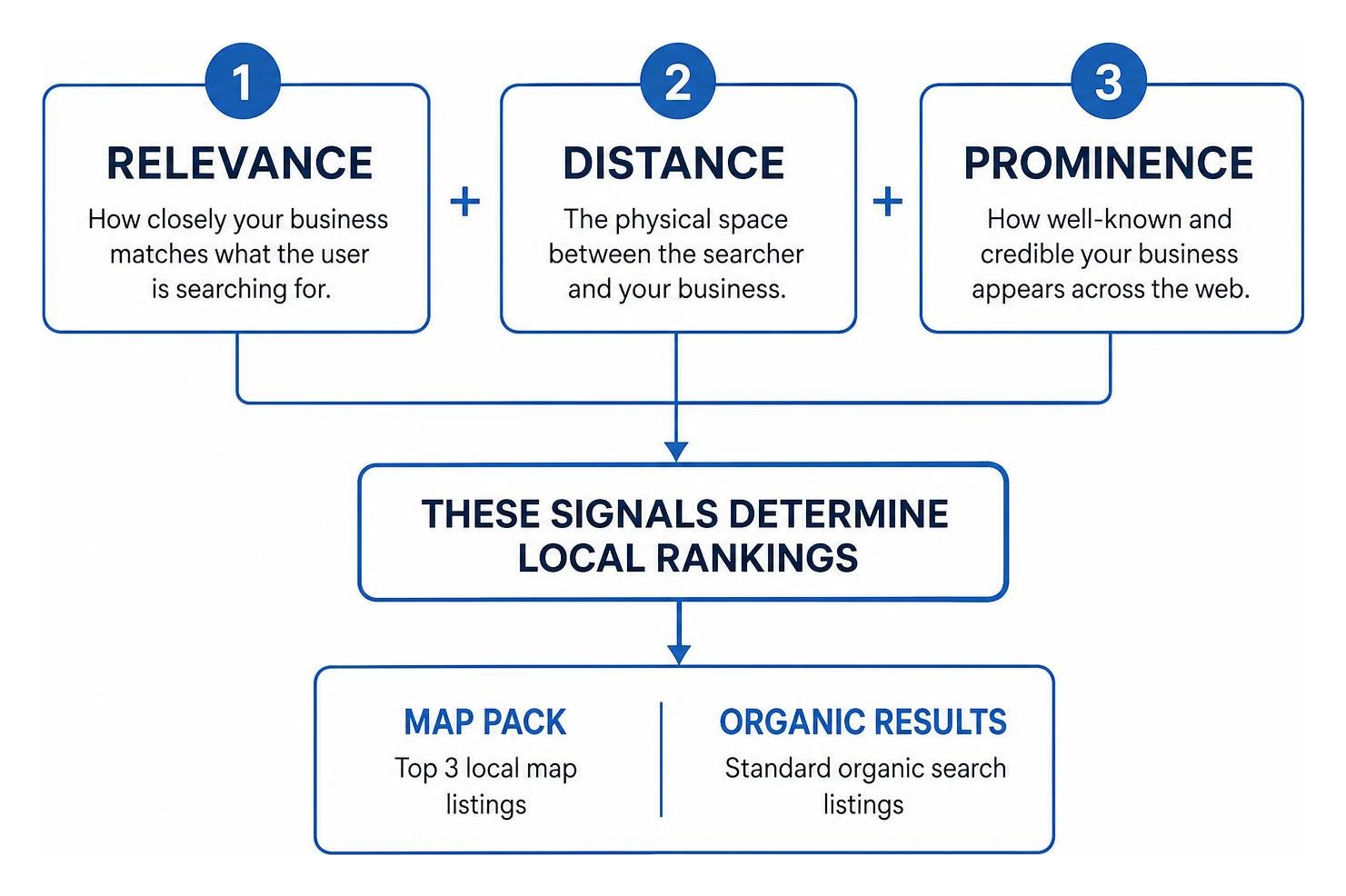
For additional practical guidance, explore the ultimate guide to Google Business Profile management and how to improve local search visibility for Australian businesses.
No business can control every local result. Search context, competition, the searcher's location and the information available to Google can all affect visibility. A practical local SEO approach focuses on the details a trade business can keep accurate and useful.
Local SEO vs Traditional SEO for Trade Businesses
Traditional Search Engine Optimisation (SEO) and local SEO share the goal of helping a website appear for relevant searches. Local SEO for trade businesses places more emphasis on geographic relevance, service areas, business information and the customer journey from a local search to an enquiry.
For example, a plumber may need a clear page for hot water repairs, accurate service-area details and a profile that reflects current trading hours. A website gives customers fuller service information and proof points, while a Google Business Profile helps them quickly see contact details, reviews and map information. Together, they can make it easier for customers to choose the next step.
Which Trade Businesses Can Benefit from Local SEO?
Plumbers, electricians, builders, roofers, landscapers, painters and other local service providers can benefit from local SEO when it reflects the work they actually perform and the areas they genuinely serve. SEO services for local businesses can help turn that focus into a practical plan.

A sole trader covering a handful of nearby suburbs will need a different approach from a larger trade business with teams operating across Brisbane, the Gold Coast or several cities. The aim is not to claim coverage everywhere. It is to help the right customers understand which services are available, where the business works and how to get in touch. Local SEO can support visibility and enquiries, but results vary with competition, website quality, service demand and other factors outside an agency's control.
2. How to Improve Local SEO for Your Trade Business
The most effective local SEO work is practical and ongoing. Start with the information customers use to decide whether to contact the business, then improve the website pages and processes that support those enquiries.
Optimise Your Google Business Profile
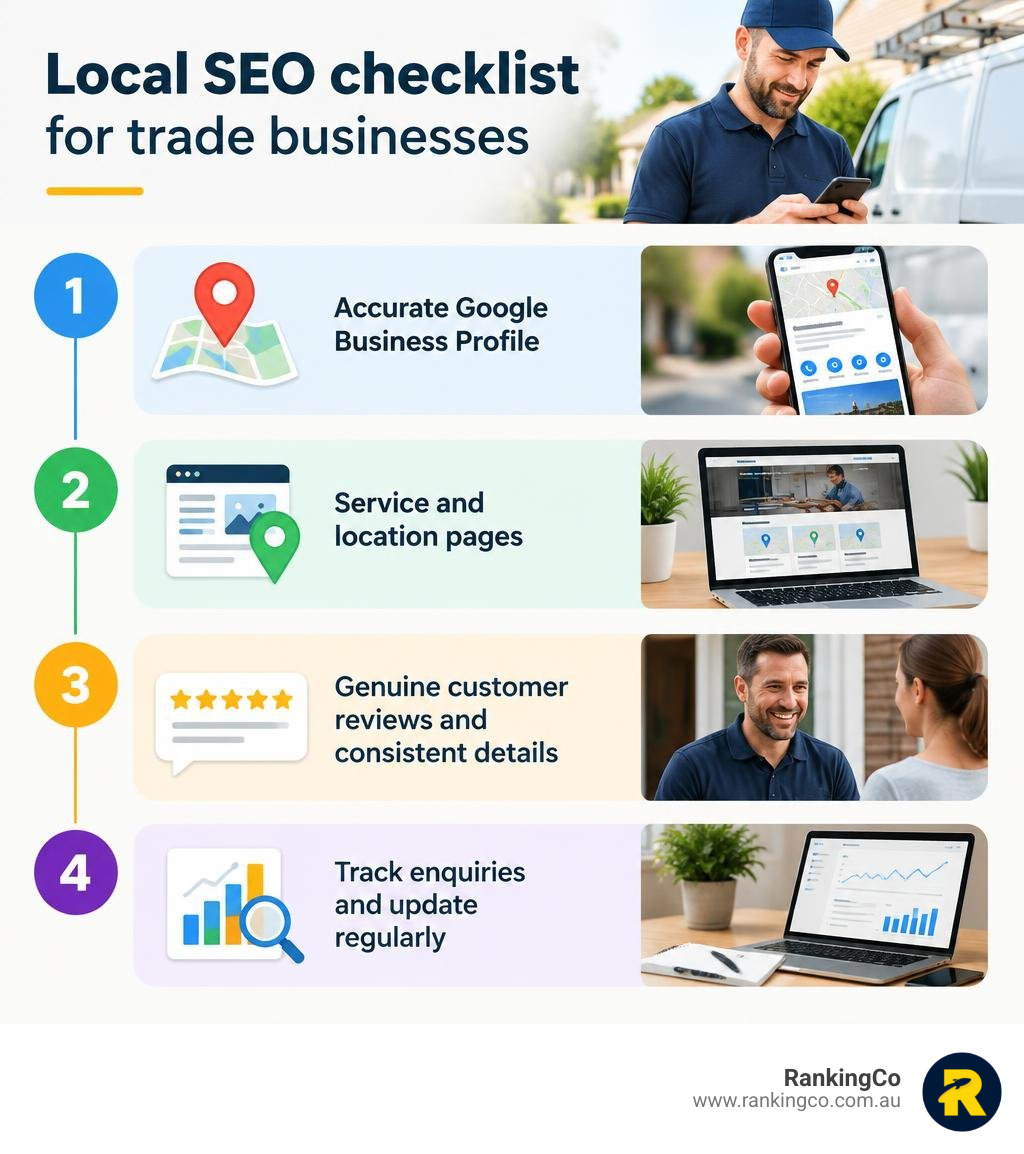
A Google Business Profile should accurately reflect the business as customers experience it. Choose the most suitable primary category, add relevant services, maintain current phone and website details, review opening hours and upload genuine photos of completed work, vehicles or team members where appropriate.
For service-area businesses, use service areas that reflect the locations the business can genuinely reach. Keep the profile current when contact details, operating hours or service coverage changes. Google provides official guidance on managing a Business Profile on Google, including the information it uses to understand local relevance.
Run a Practical Local Visibility Review
Before adding more pages or chasing individual rankings, assess the customer journey from search to enquiry. Check whether the Google Business Profile shows the correct category, trading hours, phone number, website and service areas. Then compare that information with the most important service pages on the website, including whether each page explains the work, the areas served and the next step for making contact.
This practical review is not a ranking formula. It is a repeatable way for a trade business to identify gaps in the information customers and search platforms rely on. Record the issues found, prioritise corrections that could affect a customer's ability to contact the business, and revisit the review whenever services, operating hours or coverage areas change.
Build Website Pages Around Your Services and Locations
A website gives customers more detail than a listing can. Create dedicated pages for the services the business actually performs, such as switchboard upgrades, roof repairs, bathroom plumbing or landscape construction. Each page should explain the work, who it is for, what customers can expect and the most appropriate way to enquire.
Location pages can also be useful when they include meaningful local context, such as service availability, common property considerations or examples of the work completed in that area. Avoid creating many near-identical suburb pages with only the suburb name changed. That offers little value to readers and can make the site less helpful. For more guidance, see our article on winning local SEO for your service business.
RankingCo's SEO services can help trade businesses review service-page structure, local search targeting and the technical foundations that support organic visibility.
Keep Business Details Consistent and Encourage Genuine Reviews
Local citations are references to core business details on trusted directories, platforms and websites. Keep the business name, address where applicable, phone number, website and opening hours accurate wherever the business is listed. Consistency can make it easier for customers and search platforms to understand which details are current.
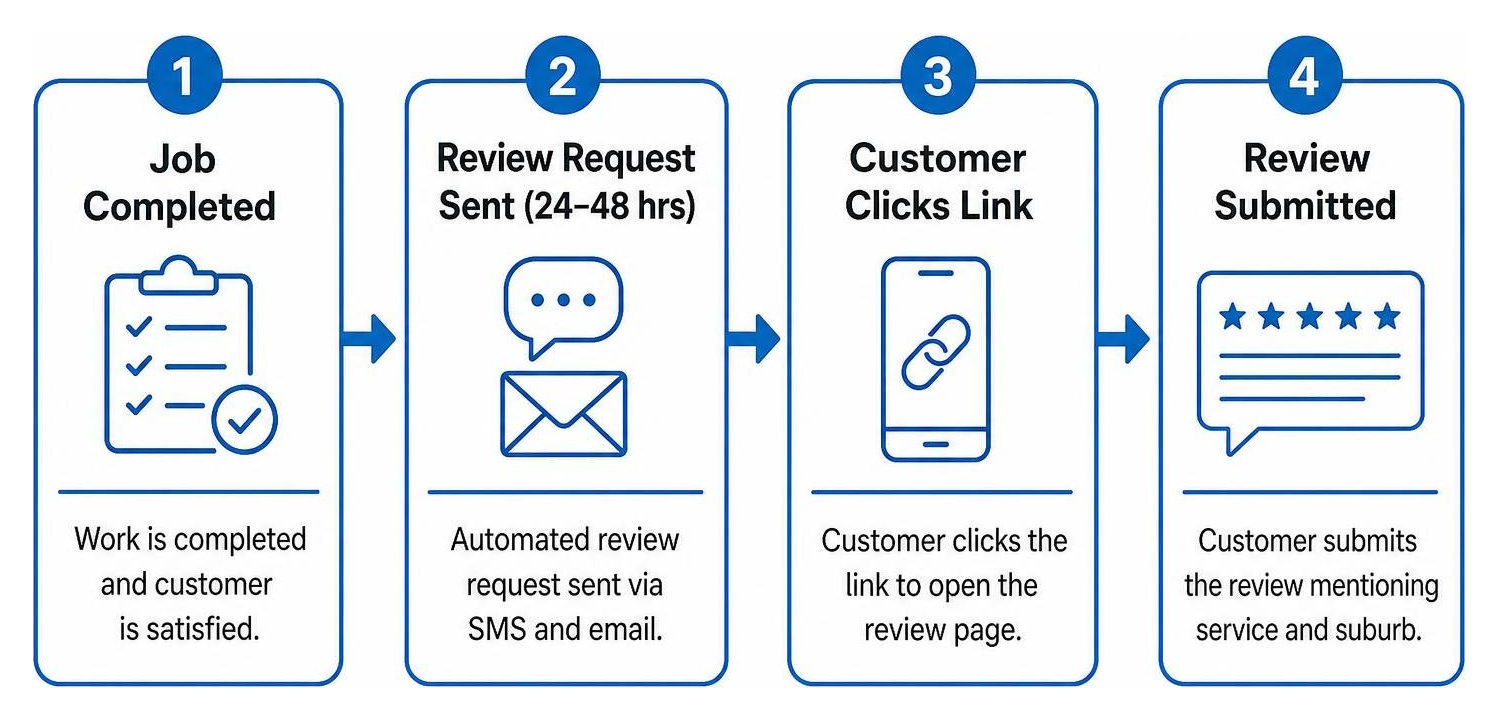
Ask real customers for an honest review after a completed job, without offering incentives or pressuring them to leave positive feedback. The ACCC's guidance on online reviews explains why businesses should avoid misleading review practices. Professional responses to both positive and critical reviews can demonstrate care and accountability to prospective customers. Reviews may support local prominence and trust, but they do not guarantee higher Google Maps rankings.
Make It Easy for Local Customers to Enquire
A local search result only creates an opportunity. The website should make the next step simple on a mobile phone, with prominent contact details, clear service descriptions, quote request options and relevant trust signals such as licences, credentials or customer feedback.
For trades with urgent callouts, an easy-to-find phone number can matter as much as the page content. For planned projects, a concise enquiry form that asks about the service, suburb and preferred contact method can help the business respond efficiently. RankingCo's website services can support a practical, lead-focused website experience.
3. How to Measure and Improve Local SEO Results Over Time
Local SEO is more useful when performance is measured against business outcomes, not only a position seen in one search result.
Track More Than Google Rankings
Review Google Business Profile interactions, including calls, website clicks and direction requests where available. Pair those signals with relevant organic website traffic, quote requests, qualified leads and booked jobs when tracking allows. Look at whether the business is being found for the services and locations that matter most.
Rankings can vary based on the searcher's location, device, search history and the competitive landscape. One search from one device is not a complete performance assessment. A clearer view comes from trends in enquiries and visibility over time.
For a more useful performance review, compare changes in visibility with the quality of the enquiries received. For example, a trade business may receive fewer total leads but more enquiries for profitable services within realistic travel areas. Record the service requested, suburb, source of the enquiry and outcome where practical. Over time, that information can help the business decide which pages, service areas and calls to action deserve further attention.
Common Local SEO Mistakes Tradies Should Avoid
Common problems include incomplete or outdated profile details, targeting suburbs the business does not genuinely serve, publishing thin location pages, ignoring customer reviews and allowing business details to become inconsistent across listings. Another frequent issue is expecting immediate outcomes or judging success by rankings alone.
Local search visibility usually improves through sustained attention to accurate information, useful website content and customer experience. Timelines and outcomes vary by market competition, service demand, the starting condition of the website and factors outside an agency's direct control.
Keep Local SEO Information Current
Local SEO is not a one-off task. Service offerings, trading hours, staff availability, coverage areas and customer expectations can change, so the information shown in search results and on the website should be reviewed regularly. A simple scheduled check can help a trade business spot outdated contact details, closed-off service areas or pages that no longer reflect the work it wants to attract.
Keeping information current also makes the website more useful for customers deciding whether to call or request a quote. It does not guarantee rankings, but it can reduce avoidable friction between a local search and a genuine enquiry.
When Should You Get Professional Local SEO Help?
Professional support may be useful when a trade business serves multiple areas, faces strong local competition or receives website traffic without enough relevant enquiries. An SEO review can identify gaps in business listings, service content, technical performance and local search targeting.
RankingCo works collaboratively with Australian trade businesses to develop transparent, measurable digital marketing plans tailored to their services and goals. To discuss local search priorities, Contact RankingCo.
Make Local Search Work Harder for Your Trade Business
A complete local SEO approach combines accurate business information, useful service pages, genuine customer reviews and ongoing measurement. These elements can help tradies give potential customers clearer reasons to make contact when they are searching for relevant services nearby.
If the business is ready to assess its current local visibility, Contact RankingCo to discuss local SEO goals, Explore RankingCo's digital marketing services to understand the available support, or Explore SEO services for your business for practical search optimisation assistance.
Frequently Asked Questions About Local SEO for Trades
How does local SEO help tradies get more enquiries?
Local SEO can help potential customers discover a trade business when they search for relevant services in the areas it serves. Clear business information, useful service pages and simple contact options can support enquiries, although results depend on competition, relevance, website quality and other factors.
How long does local SEO take to work for a trade business?
There is no fixed timeline. Progress depends on the website's starting condition, local competition, the business's service areas and how consistently its profile, content and customer information are maintained. Early improvements may be possible, but sustainable local visibility generally requires ongoing work.
Does a tradie need a website if they have a Google Business Profile?
A Google Business Profile and website have different roles. A profile can help customers quickly find map information, reviews and contact details, while a website can explain services in depth, build credibility, support quote requests and create more opportunities to appear in search results.
Can a trade business rank in suburbs where it does not have a physical address?
Service-area businesses can set eligible areas where they travel to customers, subject to Google Business Profile guidelines. Listing a suburb does not guarantee visibility there, as distance, relevance, competition and the search context can still affect local results.
How important are Google reviews for local SEO?
Google reviews can help prospective customers assess a business and may contribute to local prominence. The most useful approach is to request honest feedback from genuine customers, respond thoughtfully and use feedback to improve service. Artificial or incentivised reviews can create compliance and trust issues.
Should tradies create a separate website page for every suburb?
Location pages are worthwhile when each page offers distinct, useful information for customers in that area. A page may explain service availability, local considerations or relevant examples of work. Near-identical pages that only replace one suburb name are less helpful and should be avoided.




Share online


