Why Local SEO Benefits Small Businesses More Than You Think
Are You Actually Getting Value from Local Search Visibility?

Local SEO benefits are the visibility, trust, and revenue gains a business earns when nearby customers can find it at the exact moment they need a local provider. For small and medium-sized Australian businesses, that can mean more calls, quote enquiries, store visits, booked appointments, and direction requests from people already searching with local intent.
The short answer: Local SEO helps you appear where local buying decisions happen: Google Maps, the Local Pack, organic search results, and, increasingly, AI-powered answers. Its biggest advantage is relevance. Instead of interrupting broad audiences, local SEO captures people who already have a problem, a location, and a reason to act.
The core local SEO benefits at a glance:
| Benefit | Why it matters |
|---|---|
| Higher-intent enquiries | Local searchers are often ready to call, visit, book, or compare providers now. |
| Stronger local visibility | Your business can appear in Maps, Local Pack results, organic listings, and AI answers. |
| More trust before contact | Reviews, accurate details, photos, and helpful local content reduce buyer hesitation. |
| Better long-term ROI | Organic local visibility can keep producing enquiries after the initial work is done. |
| Clearer local relevance | Search engines better understand what you do, where you operate, and who you serve. |
At RankingCo, we help small and medium-sized Australian businesses turn local search visibility into measurable growth. The focus is simple: make it easier for nearby customers to find, trust, and contact your business when they are actively looking for your service.
I’m Kerry Anderson, co-founder of RankingCo. In this guide, I’ll show how local SEO can improve enquiry quality, how it compares with Google Ads, what to measure when judging ROI, and which misconceptions often hold businesses back.
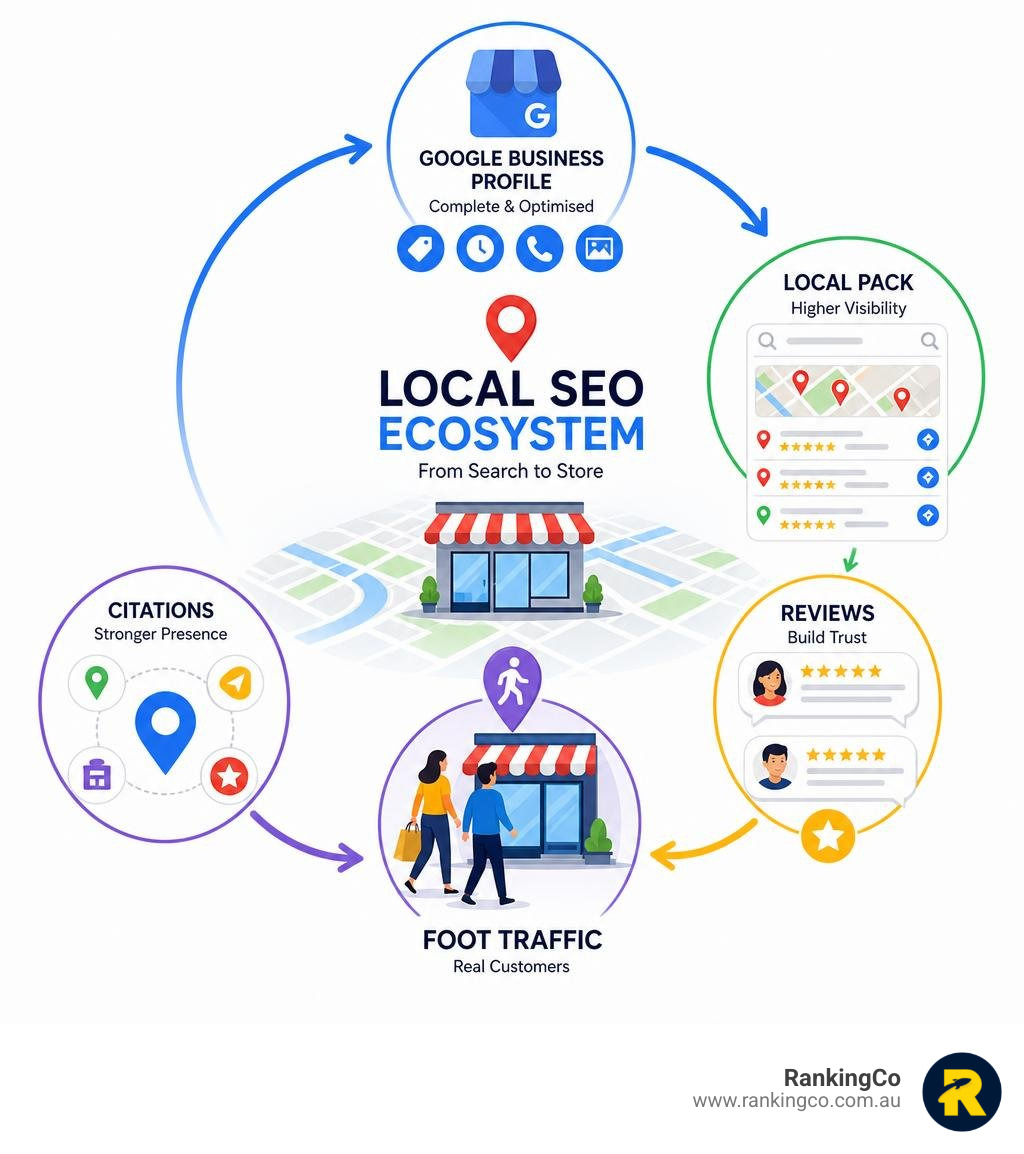
Why Local SEO Benefits Are Essential for Modern Businesses
Ignoring your local search presence means missing customers who are already close to making a decision. When someone searches for a nearby plumber, dental clinic, retailer, restaurant, or marketing agency, they usually have an immediate need, a preferred location, and a shortlist mindset. That is why local SEO often produces more commercially useful enquiries than broad awareness campaigns.
The value comes from three things:
- Intent: the customer is actively searching for a solution, not passively seeing an ad.
- Location fit: the customer is looking in an area your business can actually serve.
- Trust signals: reviews, business details, photos, service pages, and local content help them decide before they contact you.
According to data compiled in the Local SEO Guide 2026, approximately 46% of all Google searches carry local intent. The same guide highlights that 76% of mobile users who conduct a local search visit a physical business location within 24 hours. Those figures explain why local visibility is not just a branding channel; it can influence real calls, visits, bookings, and enquiries.
Local SEO vs Google Ads: Which Delivers Better Value?
Local SEO and Google Ads can work together, but they create value in different ways. Google Ads can create fast visibility while local SEO builds durable visibility, trust, and organic demand over time.
| Factor | Local SEO | Google Ads |
|---|---|---|
| Speed | Builds gradually as signals strengthen | Can generate traffic quickly |
| Cost model | Investment in assets that can compound | Pay per click, lead, or campaign budget |
| Trust | Supported by reviews, organic rankings, and local authority | Clearly marked as sponsored placement |
| Longevity | Can keep producing leads after optimisation work | Traffic usually stops when spend stops |
For many small businesses, the strongest approach is simple: use ads when you need immediate demand, and use local SEO to reduce long-term dependence on paid clicks.
How to Measure ROI from Local SEO
Local SEO ROI should not be judged by rankings alone. Rankings matter, but they are only useful if they lead to commercial outcomes. The better question is: which local search actions are turning into revenue?
Track these indicators together:
| Metric | What it tells you |
|---|---|
| Phone calls | Whether local searchers are taking direct action. |
| Direction requests | Whether visibility is driving store or office visits. |
| Form submissions and quote enquiries | Whether search traffic is becoming sales conversations. |
| Bookings or appointments | Whether local pages and profiles are creating measurable demand. |
| Google Business Profile views and actions | Whether Maps and Local Pack visibility are improving. |
| Organic traffic to service and location pages | Whether your website is capturing relevant local demand. |
| Lead-to-sale conversion rate | Whether enquiries are commercially valuable, not just numerous. |
A practical ROI formula is:
Local SEO ROI = revenue from local SEO leads minus local SEO investment, divided by local SEO investment.
The exact attribution will vary by business, but the goal is straightforward: connect calls, bookings, forms, and store visits back to revenue so local SEO can be judged by outcomes, not vanity metrics.
How to Maximise the Local SEO Benefits for Your Business
To get more value from local SEO, focus on the signals that help customers choose you confidently before they make contact.
The highest-impact areas are:
- Keep your Google Business Profile accurate, complete, and active.
- Earn and respond to reviews consistently.
- Maintain accurate business information across your website and important directories.
- Create useful local content that answers real buyer questions.
- Make service and contact details easy to understand.

Clear, consistent business information also helps AI search systems understand who you are, what you offer, and where you operate. That does not require a separate AI-only strategy; it simply rewards the same clarity, proof, and helpful answers that make local SEO useful for customers.
For businesses looking to capture high-value local leads, our Leads SEO services are designed to align your website with both search engine algorithms and real customer decision-making.
If you want to turn local visibility into more qualified enquiries, contact our team or explore our SEO services.
Frequently Asked Questions About Local SEO
These FAQs answer the questions business owners are most likely to ask when comparing local SEO with paid ads, deciding what to prioritise, or trying to understand whether local search will produce worthwhile enquiries.
What are the biggest local SEO benefits for small businesses?
The biggest benefits are better local visibility, more relevant enquiries, more trust before contact, and clearer measurement of customer actions. Local SEO helps your business appear when people are actively looking for a provider in your area, which makes the traffic more useful than broad awareness traffic.
Is local SEO better than Google Ads?
Local SEO is better for long-term, compounding visibility, while Google Ads is better for fast, controlled traffic. If you need enquiries immediately, ads can help. If you want to reduce dependence on paid clicks over time, local SEO is essential. The strongest strategy often combines both: use ads for speed and testing, then use local SEO to build durable visibility around the services, suburbs, and offers that convert best.
How do I measure local SEO ROI?
Measure local SEO ROI by tracking commercial actions, not just rankings. Look at phone calls, form submissions, quote requests, bookings, direction requests, Google Business Profile actions, organic traffic to service pages, and lead-to-sale conversion rates. Then compare the revenue from those enquiries with your local SEO investment.
How long does local SEO take to work?
Most businesses need consistent work over several months to see meaningful gains, especially in competitive markets. Early improvements may appear in Google Business Profile actions, calls, or visibility for less competitive searches. Stronger organic rankings, location page performance, and compounding enquiry flow usually take longer because search engines need time to crawl, assess, and trust your signals.
What should I optimise first for local SEO?
Start with the assets most likely to affect trust and action: your Google Business Profile, core service pages, location pages, reviews, contact details, opening hours, website metadata, and conversion tracking. Once those are accurate, improve FAQs, citations, local content, and structured data where they genuinely help customers and search engines understand your business.
Do I need a separate page for every suburb or service area?
Not always. Location pages work best when they are genuinely useful and relevant. A suburb page should explain the services you provide in that area, include practical local context, and help the customer decide. Thin or duplicated suburb pages can feel spammy and may not help performance. Quality and relevance matter more than volume.
Is a Google Business Profile enough for local SEO?
No. A Google Business Profile is important, but it is only one part of local SEO. Your website, reviews, citations, service pages, location content, internal links, schema, and conversion tracking all support local visibility. A strong profile can drive action, but your wider online presence helps search engines and customers verify that your business is the right choice.
How does local SEO help with AI search visibility?
Local SEO helps AI search by making your business easier to understand and verify. Clear service descriptions, consistent business details, strong reviews, location relevance, schema markup, and helpful FAQs give answer engines more confidence when summarising or recommending local providers.
What are common misconceptions about local SEO?
Common misconceptions include thinking local SEO is only about rankings, that one Google Business Profile update is enough, that every suburb needs a separate page, or that results should appear overnight. In reality, local SEO works best as an ongoing system of accurate business information, useful content, reviews, local relevance, measurement, and regular optimisation.
How do I get started with local SEO services?
Start by auditing your current local visibility, Google Business Profile, service pages, reviews, tracking setup, and conversion paths. From there, prioritise the fixes most likely to generate valuable enquiries first. If you would like help building that roadmap, get in touch with RankingCo or explore our SEO services.




Share online