
What Does an AI SEO Agency Do? A Guide for Businesses
The Complete Guide to Choosing an AI-Driven SEO Agency

Businesses are now discovered through traditional search results, Google AI Overviews and conversational tools, so search visibility is more complex to build and measure. An AI-driven SEO agency combines AI-assisted research and analysis with human-led strategy to improve organic performance, useful website content and discoverability across relevant search experiences. This guide explains what to look for, which questions to ask and how to judge meaningful progress.
I’m Kerry Anderson, Co-Founder of RankingCo. I help shape how our team uses AI-assisted analysis alongside practical Search Engine Optimisation (SEO) strategy, editorial review and transparent reporting for Australian businesses.
Key Takeaways
- An AI-driven SEO agency uses machine-assisted analysis and human expertise to support organic search performance and AI search visibility.
- Technical SEO, helpful content, topical authority and clear business information remain central to sustainable visibility. Businesses can explore tailored SEO services to assess these foundations.
- Generative Engine Optimisation (GEO) and Answer Engine Optimisation (AEO) can support discoverability in AI-generated answers, but mentions and citations vary by platform and query.
- A strong agency should explain its methods, quality controls, reporting and commercial priorities in plain language.
- SEO performance is best assessed through relevant visibility, qualified traffic, enquiries and conversions rather than rankings alone.
What Sets an AI-Driven SEO Agency Apart?
An AI-driven SEO agency does not replace established SEO with automation. Instead, it uses AI tools to handle large sets of information more efficiently, while experienced people decide what matters for the business, validate the evidence and prioritise work. The best approach brings together technical health, audience understanding, content quality and commercial goals. For businesses reassessing their approach, our article on why your current SEO stack is obsolete without modern AI solutions offers additional context.
How AI Improves SEO Research and Strategy
AI-assisted workflows can help an agency identify search intent, map relationships between related queries, group keywords into practical topic clusters and spot gaps in competing pages. They can also surface recurring technical issues and support faster performance analysis. These capabilities can make research more efficient, but the outputs still need interpretation. A strategist must decide whether a pattern is relevant to the audience, commercially useful and realistic to address.
| Workflow area | Conventional manual workflow | AI-assisted workflow |
|---|---|---|
| Research | Reviews priority keywords and search results individually | Helps group related queries and identify semantic themes at scale |
| Analysis | Compares pages and technical findings manually | Detects patterns across crawls, content and performance data |
| Content development | Plans and drafts with editorial input | Supports outlines and gap analysis, with human editorial review |
| Technical auditing | Works through issues by severity and impact | Helps prioritise recurring crawl, indexation and schema issues |
| Reporting | Reviews selected metrics and trends | Helps surface changes and questions for strategic discussion |
These approaches complement each other. AI can reduce repetitive analysis, while skilled practitioners provide judgement, local market context and accountability for the recommended work.
Core Capabilities to Look for in an AI SEO Agency
The core capabilities of an effective agency include technical audits, crawlability and indexation, semantic research, topical authority, content optimisation, accurate structured data, ongoing monitoring and clear reporting.

A capable team should also explain who checks AI-assisted research, how factual claims are reviewed and how recommendations connect to leads, sales or other agreed outcomes. For example, AI tools may identify that a service page answers only a broad question while prospective customers are searching for practical comparisons, costs or implementation steps. An experienced strategist can validate that gap, review customer needs and create a page that gives useful, accurate guidance rather than producing generic copy.
Our approach to AI SEO automation for smarter workflows is to use automation where it improves efficiency while retaining human review and strategic direction. For foundational guidance, consult Google Search Central documentation.
Why Human Expertise Still Matters
AI-generated recommendations need context. They may miss differences in customer language, local demand, compliance requirements, brand positioning or the practical limits of a website. Human specialists assess whether a recommendation is accurate, useful and aligned with the organisation’s priorities before it is implemented.
Publishing a large volume of unreviewed material is not a substitute for helpful content. Google’s people-first content guidance focuses on content created to benefit people, rather than content made primarily to attract search traffic. In practice, that means SEO teams should use AI to support research and workflows, then apply subject knowledge, editorial standards and evidence checks before publishing.
How AI SEO Agencies Optimise for Traditional Search and AI Answers
Established SEO fundamentals help search engines and AI-assisted discovery systems access, interpret and evaluate website information. The exact systems used by each platform differ and can change, so no agency can control whether a brand appears in a particular generated answer. The practical objective is to make important information clear, accessible, accurate and useful for the people searching for it.
Generative Engine Optimisation and Answer Engine Optimisation
GEO and AEO describe approaches that make content easier to understand in generative and answer-led search experiences. They build on traditional SEO rather than replacing it. Clear definitions, logical headings, direct explanations and consistent brand information can help people and automated systems interpret a page.
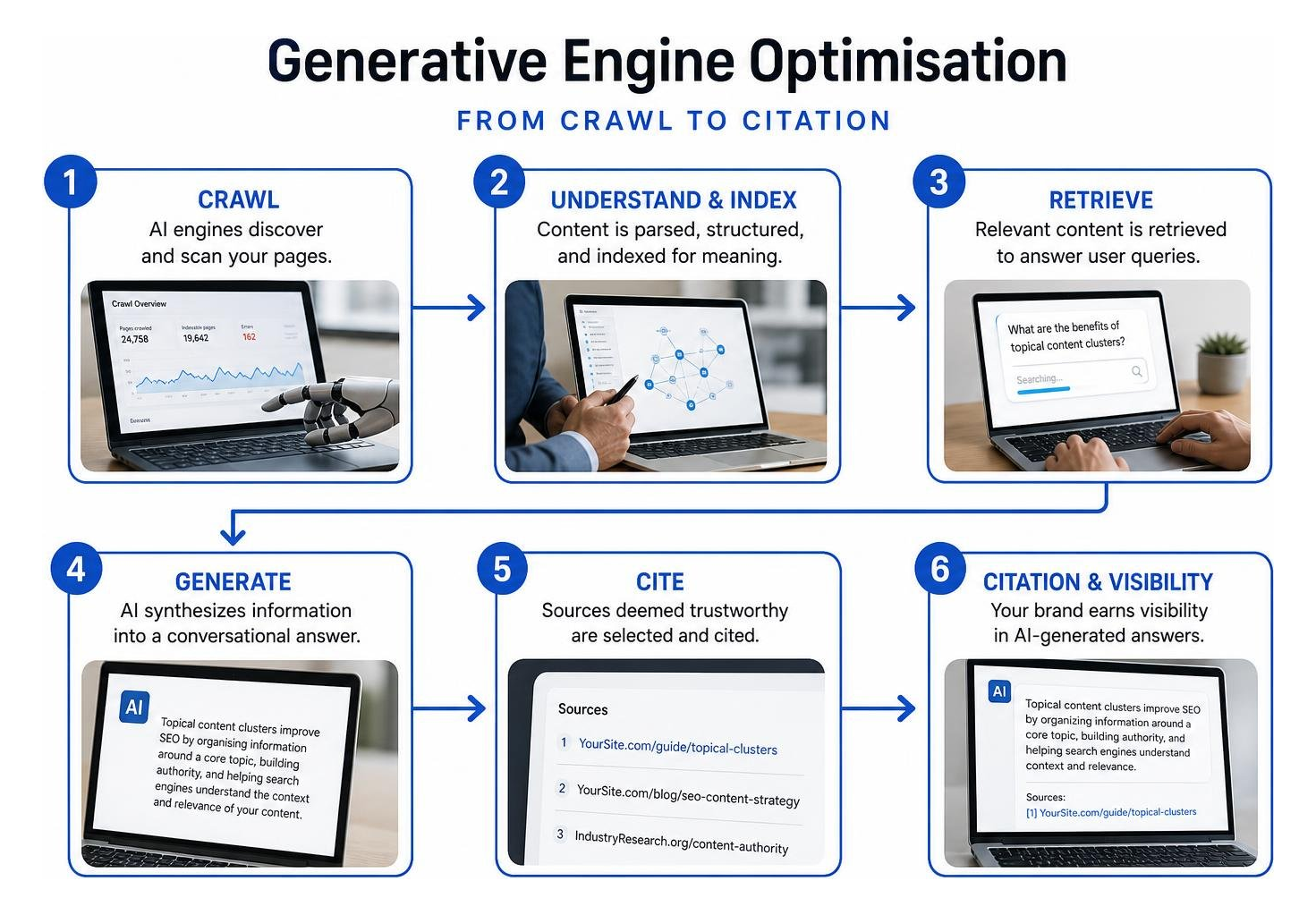
Businesses may earn mentions or citations in tools such as ChatGPT, Google AI Overviews and Perplexity when their information is relevant to a query, but the results can vary between platforms, searches and users. A complete guide to Generative Engine Optimisation can help business owners understand how these emerging practices relate to broader search strategy.
Technical SEO, Structured Data and Entity Authority
A technically accessible website gives search engines a better opportunity to discover, crawl and understand its content. Practical priorities include a clear site structure, useful internal links, mobile usability, page performance, clean rendering and pages that can be indexed where appropriate. Google’s overview of crawling and indexing is a useful reference for how Google accesses web content.
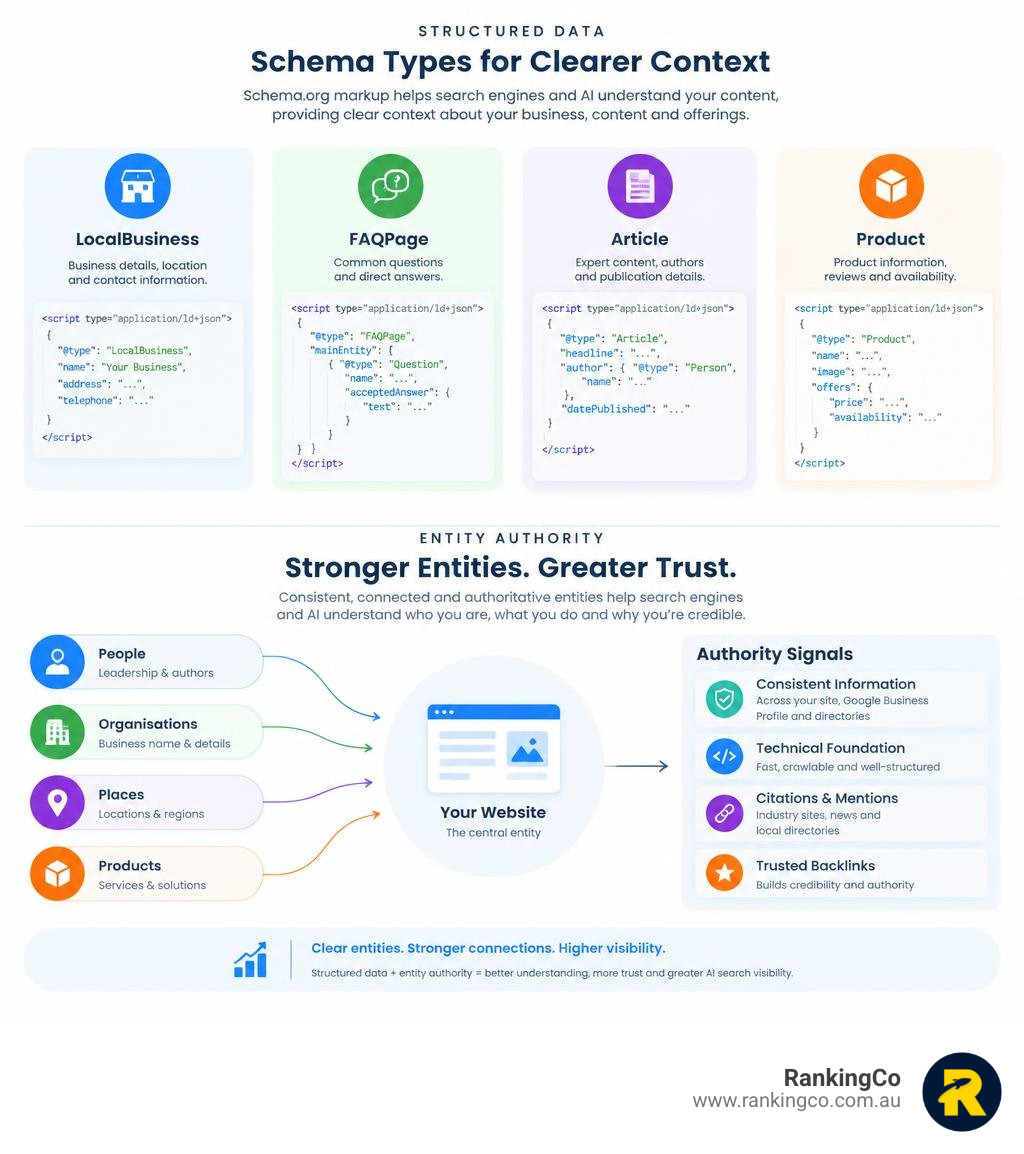
Structured data can provide additional context when it accurately reflects what is on the page. Relevant Schema.org markup may help search engines interpret business details, articles, products or FAQs, but it does not promise rankings or inclusion in AI answers. Google’s structured data documentation recommends using markup that matches the visible content. Consistent details about services, locations, leadership and brand descriptions also support entity clarity across the web.
Some businesses are considering llms.txt
as part of their AI search planning. It remains an emerging, non-standardised practice, so it should be assessed alongside established technical priorities rather than treated as a required ranking factor.
Content Optimisation for AI Search Visibility
Content designed for people is also easier to interpret when it answers the relevant question early, uses descriptive headings, defines technical terms and supports key claims with current evidence. Helpful pages include practical examples, comparisons and details that demonstrate genuine subject expertise. They should also use consistent terminology and accurate business information.
Answer-first formatting is a content-quality practice, not a method for securing citations. It can make a page more useful for readers who want a clear explanation without removing the depth needed for an informed decision. RankingCo’s discussion of AI-generated content and organic visibility explores why usefulness, originality and editorial review remain important.
How to Choose an AI-Driven SEO Agency and Measure Results
Choosing an agency involves more than comparing a list of tools. Look for a partner that can explain how research, technical work, content and reporting support the business goals that matter to you.
Questions to Ask Before Hiring an AI SEO Agency
Ask prospective agencies how they use AI in their SEO process. A strong answer should give specific examples of research, analysis or workflow automation rather than relying on vague claims about proprietary technology. It should also identify the people responsible for reviewing recommendations and published content.
A practical evaluation checklist includes the following questions:
- How do you use AI in your SEO process? Look for examples of how it supports research, prioritisation and analysis.
- Who reviews AI-assisted research and content? Confirm that qualified people check facts, recommendations and final copy.
- How do you approach technical SEO and content strategy? Expect a process that covers site health, search intent, topical coverage and implementation priorities.
- How do you assess AI search visibility? Ask which platforms and queries are monitored, how mentions are recorded and what limitations affect the data.
- How do you connect SEO performance to business outcomes? Look for reporting on qualified organic traffic, enquiries, conversions and revenue where attribution is reliable.
- What will you report, and how often? Agree on reporting frequency, accessible data and clear explanations of progress.
- How will you adapt the strategy over time? Ongoing analysis and prioritisation are more useful than a fixed list of automated tasks.
Be cautious of opaque reporting, unexplained technical recommendations, mass-produced unreviewed content or claims that an agency can secure a specific ranking or AI citation. RankingCo’s guide to evaluating professional SEO agency services provides further questions to consider when comparing providers.
SEO can also complement other channels. Depending on the business model, a coordinated strategy may include Google Ads, social media advertising, eCommerce SEO or lead-generation SEO. The right mix depends on the audience, sales cycle, budget and competitive environment. For some businesses, Bing Ads may also complement an integrated search strategy.
How to Measure AI SEO Performance
AI search visibility is still developing, and no single metric captures the full picture. Reporting should combine organic search performance, AI search observations and commercial outcomes.
Organic search performance can include search impressions and clicks, relevant keyword trends, engagement on organic landing pages, qualified traffic and conversions. AI search visibility can include brand mentions across selected platforms, presence for a consistent set of customer queries, identifiable referral sessions and the accuracy of how the business is described. Commercial performance should focus on qualified enquiries, sales, Conversion rate optimisation (CRO), lead quality and revenue or pipeline contribution where reliable attribution is available.
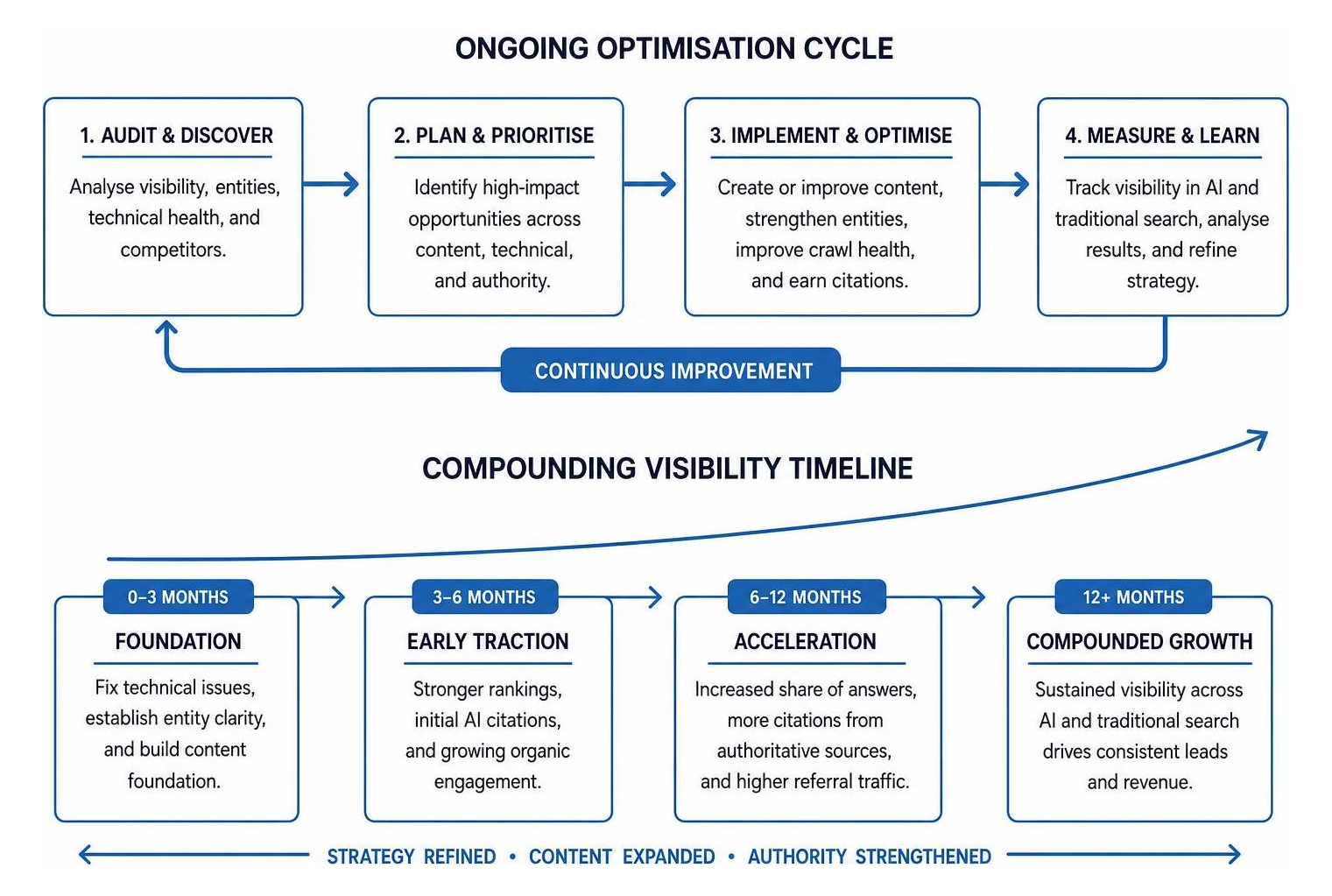
AI-generated answers can differ between runs, users, platforms and queries. Consistent monitoring methods and cautious interpretation are more useful than treating a citation count as a definitive measure of business value. A transparent agency should explain what is being measured, what remains uncertain and how the findings affect the next priorities.
How Long Does AI-Driven SEO Take to Show Results?
SEO timelines vary with competition, website condition, existing authority, implementation speed and the scope of work. Technical fixes and structured data updates may be completed relatively quickly, while improved organic visibility, topical authority and discovery in AI search experiences usually require sustained work over time.
A sensible starting point is to establish a baseline, agree on realistic milestones and review progress regularly. Investment also varies according to website size, technical complexity, content requirements, competition and reporting needs. Businesses should compare the scope, quality controls and strategic value of a proposal, not only its price.
For a broader view of RankingCo’s support across SEO, advertising and web strategy, explore our services.
Conclusion: Choose an AI SEO Partner Focused on Sustainable Growth
The right AI-driven SEO agency combines established SEO fundamentals, useful content, AI-assisted analysis and experienced human judgement. AI can improve the efficiency of research and reporting, but sustainable search growth depends on accurate information, strong technical foundations, clear priorities and a strategy that reflects the business’s customers and goals.
At RankingCo, we work with Australian small and medium-sized businesses that want practical, transparent digital marketing support, backed by verified Google Premier Partner, Meta Business Partner and Shopify Partner credentials. We use AI-assisted analysis to inform decisions while our team reviews the evidence, explains the priorities and focuses on work that can support meaningful visibility and commercial outcomes.
To discuss a tailored approach, explore our SEO services, review our Google Ads services, or Contact RankingCo.
Frequently Asked Questions About AI-Driven SEO Agencies
What is an AI-driven SEO agency?
An AI-driven SEO agency uses artificial intelligence tools to support research, analysis, technical diagnostics and content planning while experienced specialists guide the strategy and quality control. The purpose is not to automate every decision. It is to use relevant data efficiently and apply human judgement to the actions that can support the business’s search performance.
Can AI replace a traditional SEO agency?
AI can automate selected tasks and help teams assess large amounts of information, but it does not replace technical judgement, strategic prioritisation, customer understanding or accountability. Effective SEO still needs people to validate findings, make trade-offs, protect brand quality and connect activity with commercial objectives.
Do AI SEO agencies optimise websites for ChatGPT and Google AI Overviews?
Agencies can improve the underlying content, technical accessibility, topical coverage and authority signals that may support discovery in conversational tools and AI-led search features. However, no agency can control or promise inclusion in a particular response because results depend on the platform, the query and the information available at the time.
Is AI-generated content bad for SEO?
AI assistance alone does not determine whether content is useful or suitable for SEO. The important considerations are originality, accuracy, reliability, relevance and whether the page genuinely helps the intended reader. Human editing and evidence checks are important before publishing, particularly for topics where inaccurate information could affect customer decisions.
How much does an AI-driven SEO agency cost?
The cost of AI SEO optimisation depends on website size, industry competition, technical work, content scope, reporting requirements and the level of strategic support required. Compare proposals by their deliverables, quality controls, transparency and alignment with the business’s goals rather than choosing based on price alone.
How can a business check whether it appears in AI search results?
Monitor a consistent set of relevant customer questions across the AI platforms that matter to the audience, record brand mentions or citations where they appear, review identifiable referral traffic and compare results over time. Individual tests can vary, so a documented monitoring approach gives a more useful view than relying on a single search.
How long does AI-driven SEO take to work?
The timeframe depends on the starting condition of the website, competition, implementation speed, content needs and existing authority. Businesses may see technical changes completed early in a campaign, while meaningful visibility and lead-generation improvements generally require ongoing work, monitoring and refinement.



Share online


