SEO vs Google Ads: Which Is Better for a Growing Business?
SEO vs Google Ads: Which Is Better for a Growing Business?

For a growing business, Google Ads may help capture existing search demand sooner, while Search Engine Optimisation (SEO) builds organic search visibility over time. Neither channel is automatically the better choice. The right priority depends on your budget, urgency, competition, sales cycle, website readiness, and long-term goals.
At RankingCo, we help businesses assess those trade-offs before investing. Google Ads uses paid placements to reach people searching for relevant services, while SEO improves the content, technical health, service pages, and local relevance that can help a website earn visibility in organic results. Both require ongoing attention, but they create value in different ways.
Key Takeaways
- Google Ads can be useful when a business needs to test an offer or capture high-intent demand sooner.
- SEO can support sustainable organic visibility, but rankings take time and depend on competition, website quality, content, and other factors.
- A limited budget is often better focused on the channel that best matches the business's immediate objective rather than split too broadly.
- Landing pages, tracking, and a clear conversion path matter before increasing paid search investment.
- A well-planned SEO strategy for small business growth can complement paid search as a business builds its online presence.
SEO vs Google Ads: What's the Difference?
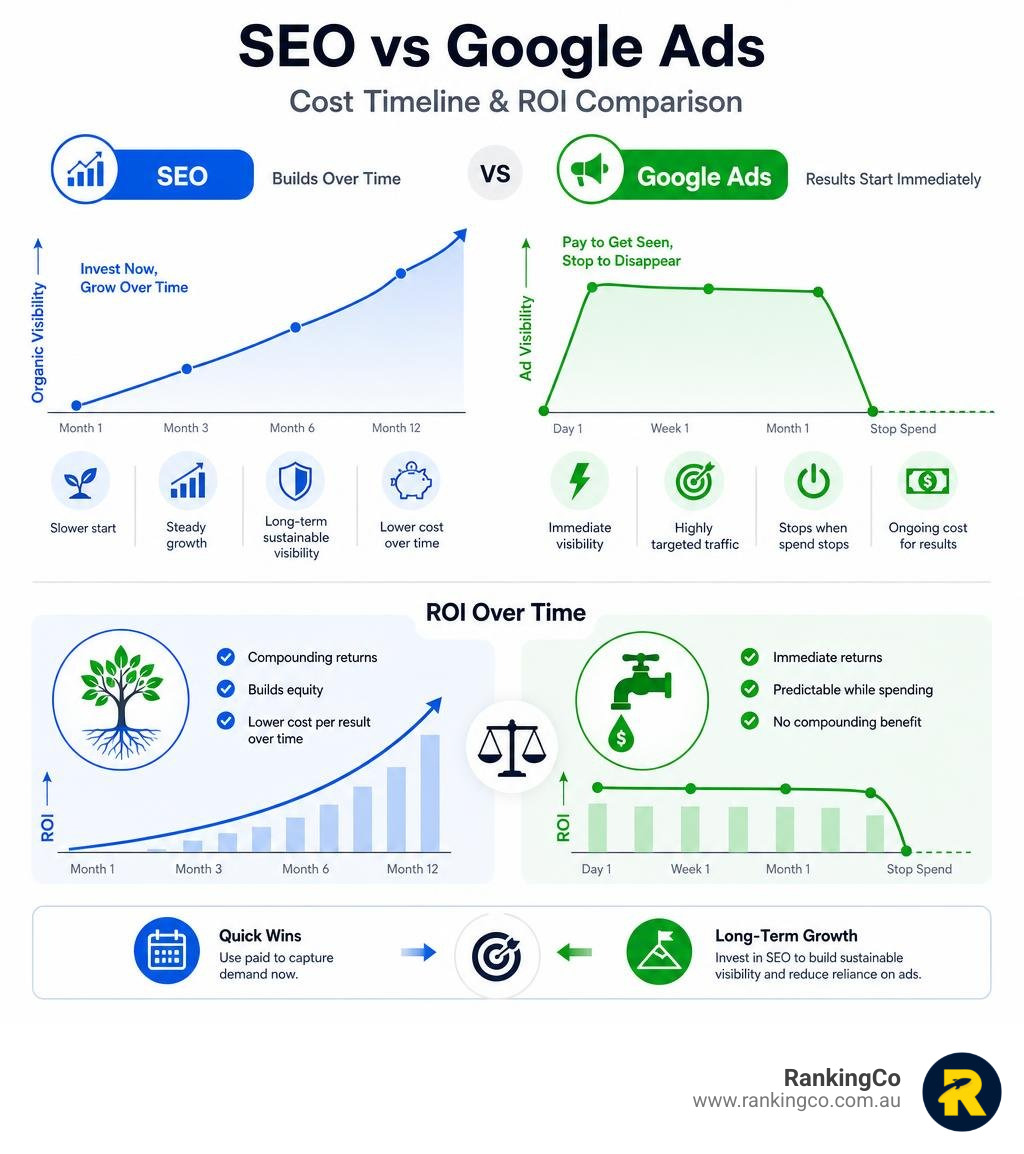
SEO and Google Ads both improve search visibility, but they do so through different investment models. SEO focuses on earning organic visibility by improving a website's relevance, usefulness, technical performance, and authority. Google Ads uses Pay-Per-Click (PPC) advertising to place relevant ads in front of people searching for selected terms.
Google Ads can begin attracting traffic once campaigns, budgets, tracking, and approvals are in place. SEO usually takes longer because search engines need to crawl, assess, and rank improvements. Paid visibility stops when campaign spend stops, while organic visibility may continue after active work pauses, although rankings can decline without maintenance and competition can change. For business owners planning a longer-term organic approach, our guide to SEO for small business growth explains the foundations in more detail.
| Practical factor | SEO | Google Ads |
|---|---|---|
| How visibility is generated | Organic rankings supported by useful pages, technical quality, and relevance | Paid ad placements targeted to selected searches |
| Speed to initial traffic | Usually gradual | Potentially faster once campaigns are live |
| Investment model | Ongoing investment in content, technical work, and optimisation | Cost per click plus campaign management |
| When investment pauses | Visibility may continue, but can weaken over time | Paid search traffic stops when ads stop running |
| Useful search intent | Informational, commercial, and location-based research | High-intent, time-sensitive, and transactional searches |
| Cost over time | May become more efficient as relevant visibility grows, but requires ongoing work | Depends on auction conditions, bids, targeting, and conversion performance |
| Typical use case | Building a stronger long-term search presence | Testing offers, supporting promotions, and capturing immediate demand |
The best choice is not simply about which channel costs less. A business with an urgent launch, strong landing page, and clear tracking may prioritise PPC, while a business that wants to strengthen service pages and reduce reliance on paid traffic over time may prioritise SEO. Many businesses use both, but the right mix depends on their goals and resources.
When Should a Business Prioritise SEO or Google Ads?
When Google Ads May Be the Better Starting Point
Google Ads may be a practical starting point when a business needs to capture existing demand sooner, test a new service, promote a seasonal offer, or target high-intent searches. It works best when the business has a relevant landing page, reliable conversion tracking, and enough budget to gather meaningful data without spreading spend too thinly.
Paid search is not a guaranteed source of leads or Return on investment (ROI). Results vary by budget, industry, competition, targeting, conversion tracking, landing-page experience, and campaign management. Our Google Ads services and guide to high-conversion Google Ads strategies can help business owners understand the foundations that need to be in place before increasing campaign investment. For an up-to-date overview of the channel, see is Google Ads still worth it in 2026? A complete guide for businesses.
When SEO May Be the Better Long-Term Investment
SEO may be the stronger priority when a business wants to improve its service and location pages, build useful content around important topics, and grow organic visibility for both informational and commercial searches. It is particularly valuable for businesses seeking a more durable search presence rather than relying solely on paid clicks.
For further context, read is SEO worth the investment for small business? The honest truth.
SEO is not free or immediate. Progress depends on the competitiveness of the market, the website's existing quality, content relevance, technical condition, local signals, and factors outside an agency's direct control. Guidance in the Google Search Central documentation reinforces the importance of helpful content and sound technical foundations. Our SEO services focus on building the foundations that can support long-term search visibility without promising specific rankings or timeframes.
Why Businesses Can Use SEO and Google Ads Together
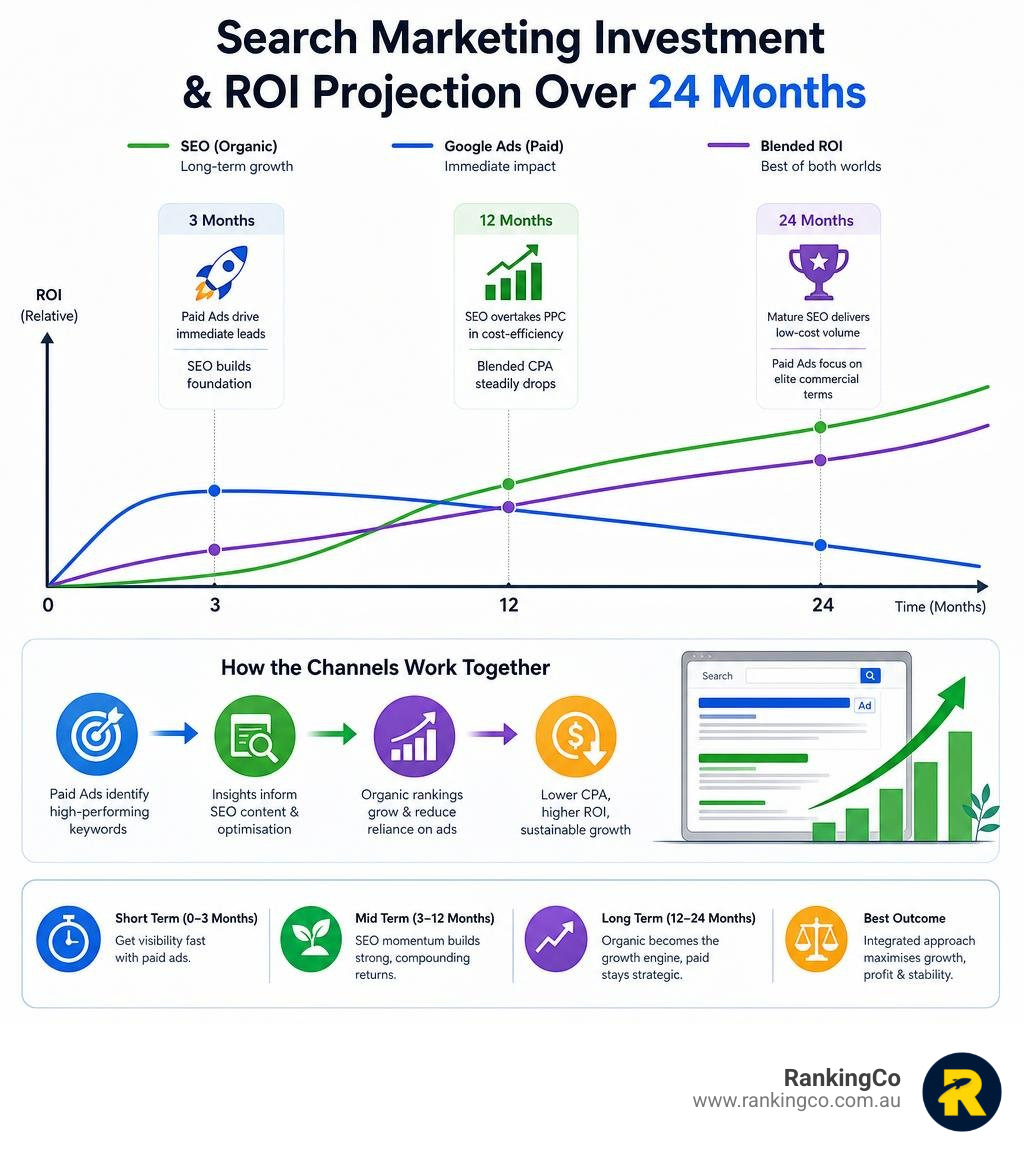
SEO and Google Ads can support different stages of the customer journey. Google Ads can help a business capture immediate demand and test which searches lead to quality enquiries. SEO can turn those insights into stronger service pages and content that may build organic visibility over time.
This does not mean that using both channels automatically produces better results. The channels should be managed as complementary options, with budget allocated according to the business's priorities, available data, and capacity to improve landing pages and content.
How Should a Growing Business Decide Where to Invest?
A practical decision starts with the business rather than the channel. Consider these questions before prioritising SEO or Google Ads:
- How quickly do you need enquiries? Google Ads may suit a business that needs to capture active demand sooner, provided campaigns and landing pages are ready.
- What does your budget and cash flow allow? A focused investment in one priority can be more useful than dividing a limited budget across too many activities.
- How competitive is the market? Review the strength of organic competitors, paid auction pressure, and the value of each potential enquiry.
- What is the sales cycle? Fast decisions may suit tightly targeted paid search, while more considered purchases may benefit from useful SEO content throughout the research process.
- Is the website ready? Clear service pages, strong calls to action, and a simple conversion path support both SEO and paid search.
- What visibility already exists? Strong organic rankings may change where paid investment is most useful, while weak service-page visibility may highlight SEO opportunities.
- What are the long-term goals? Businesses aiming to build lasting organic visibility should plan for sustained SEO work alongside any immediate demand-capture activity.
RankingCo can help assess these factors against your market, website, and growth objectives, then recommend a realistic search strategy rather than forcing a one-size-fits-all answer.
Choosing the Right Search Strategy for Your Business

There is no universal winner in the SEO vs Google Ads decision. Google Ads can be valuable for timely demand capture, testing, and high-intent searches. SEO can be valuable for building useful pages and organic visibility that support longer-term growth. The right approach depends on what your business needs now and what it wants to build next.
If you would like a clear view of your options, Contact RankingCo to discuss your goals, explore Our Services, or learn more about our SEO services. We can help you choose a practical mix of SEO and Google Ads based on your business, budget, and opportunities.
SEO vs Google Ads FAQs for Growing Businesses
Is SEO cheaper than Google Ads?
SEO and Google Ads use different investment models, so neither should automatically be described as cheaper. SEO requires ongoing work on content, technical quality, and optimisation, while Google Ads requires media spend and campaign management. The better value depends on the market, conversion path, competition, and business goals.
Can SEO replace Google Ads?
SEO may reduce a business's reliance on paid search for some queries as organic visibility improves, but it does not always replace Google Ads. Paid search can still support seasonal campaigns, new offers, highly competitive searches, and immediate demand capture. The right decision depends on the business's existing rankings and objectives.
Is Google Ads worth it for a small business?
Google Ads may be worthwhile for a small business when there is relevant search demand, a realistic budget, precise targeting, a useful landing page, and reliable conversion tracking. Before investing, assess the value of a potential enquiry and make sure the business can respond effectively to the leads it receives. Results vary by industry, competition, budget, targeting, and campaign management.
How long does SEO take compared with Google Ads?
Google Ads can begin showing once a campaign is approved and active, while SEO usually takes longer because search engines need time to crawl, assess, and rank page improvements. SEO progress depends on competition, website quality, content relevance, technical performance, and other factors outside an agency's direct control. Neither channel should be evaluated solely on its first few days of activity.
Should a new business start with SEO or Google Ads?
A new business may start with Google Ads when it needs to test demand or generate visibility sooner and has a suitable landing page and tracking in place. It may prioritise SEO when it is building core service pages, local relevance, and a longer-term search presence. In many cases, the best first step is to choose one clear priority, then expand once the business has reliable data and capacity.
Can a business use SEO and Google Ads at the same time?
Yes. Google Ads can help identify high-intent search terms and provide timely campaign data, while SEO can build pages that address the same customer needs over time. The channels work best when each has a clear role, rather than when budget is spread across both without a plan.



Share online