How to Tell If Your SEO Agency Is Actually Delivering Results
What Good SEO Looks Like Beyond Rankings and Traffic
Evaluating an SEO agency means looking beyond ranking reports and traffic totals to assess whether the work is improving relevant search visibility, qualified traffic, organic conversions and agreed business outcomes. A capable agency should be able to explain what it is doing, why it matters, how success is measured and what it will review next.
For business owners, the most useful evaluation combines commercial performance with transparency, technical capability and strategic accountability. This guide explains the SEO KPIs, reporting habits and practical questions that can help you assess whether your agency is supporting the right outcomes for your business.
At RankingCo, we work with Australian businesses to turn search activity into a clearer, more accountable marketing strategy. We believe useful reporting should make it easier to understand the work, the priorities and the commercial purpose behind them.
Key Takeaways
- Evaluate Search Engine Optimisation (SEO) through qualified organic traffic, organic conversions and commercial search intent, not rankings alone.
- Ask how non-branded search visibility, phone enquiries, quote requests and sales opportunities are being measured.
- Expect clear reporting on completed work, performance changes, insights and next priorities.
- Confirm that your business retains ownership of key digital assets and access to the underlying data.
- Explore our SEO services for a transparent, business-focused approach to search marketing.
Start With the SEO Metrics That Actually Matter
A useful SEO review starts with the question, “Is this work attracting the right people and helping the business move towards its agreed goals?” Rankings and traffic can provide context, but they are not a complete measure of agency performance. SEO KPIs should connect search visibility to commercial search intent, qualified visits and meaningful actions on the website.
Look Beyond Rankings and Traffic
Keyword rankings can help show where a website appears in search results, while organic traffic shows how many visitors arrive from unpaid search. Neither metric explains whether those visitors are likely to become customers. Ask your agency to separate branded and non-branded search, identify the pages that attract commercially relevant visitors and explain how organic performance supports leads, enquiries or revenue where suitable data is available. Our SEO services are built around this kind of commercially relevant review.
| Performance area | Surface-level measure | More useful evaluation question |
|---|---|---|
| Search visibility | Total keyword counts | Is visibility improving for relevant, non-branded searches with commercial intent? |
| Website traffic | Broad traffic increases | Are qualified visitors reaching important service, product or location pages? |
| Lead generation | Raw form submissions | Which enquiries, phone calls or quote requests came from organic search? |
| Authority | Link volume | Are backlinks and brand mentions relevant, legitimate and explainable? |
| Reporting | Automated charts | What changed, why did it change and what should happen next? |
Check Whether Conversion Tracking Is Reliable
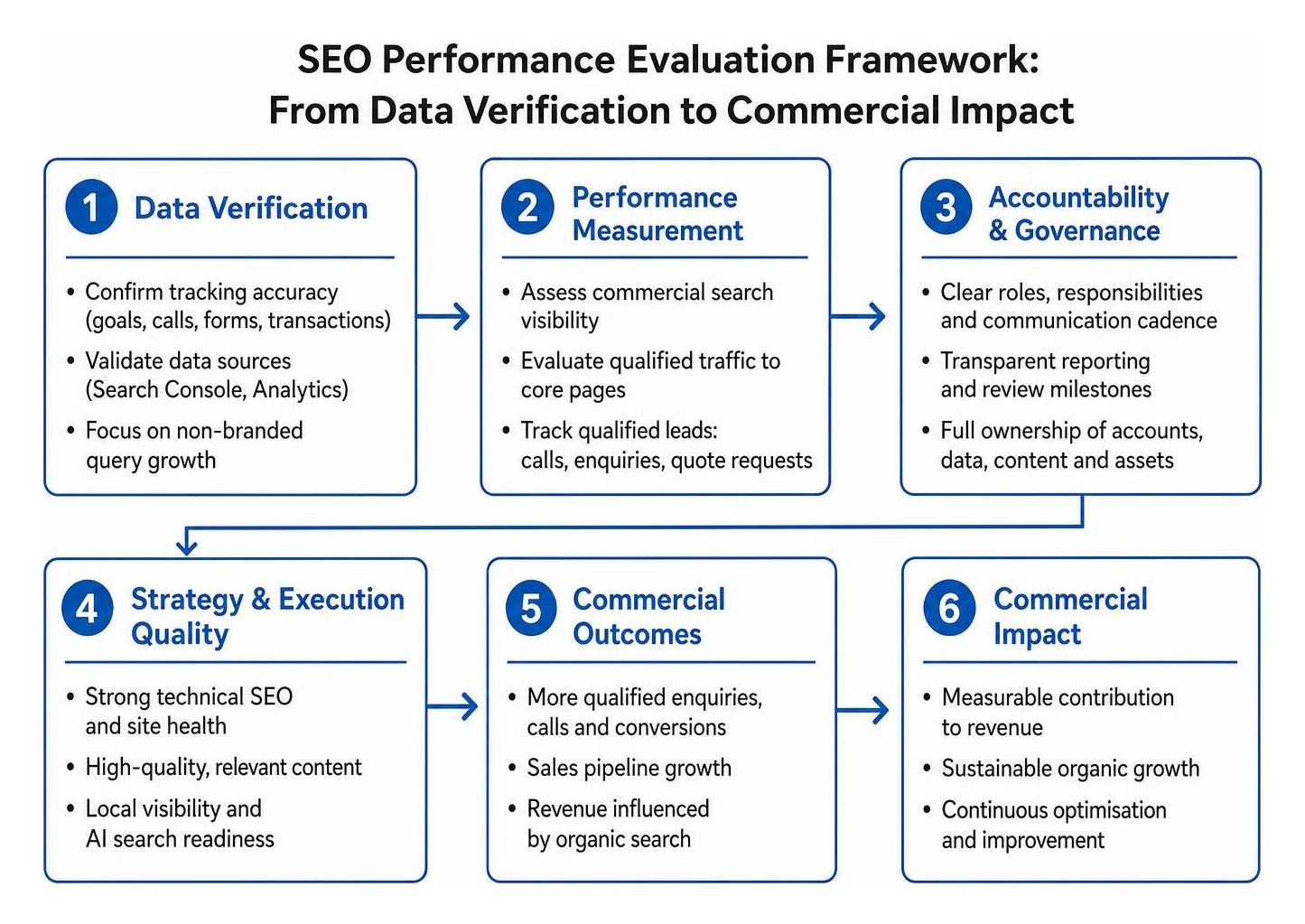
Conversion tracking records meaningful actions such as phone enquiries, quote requests, purchases or booked consultations. Your agency should be able to explain which actions count as organic conversions, how they are tracked and where the data comes from. Where your business uses a customer relationship management system, it can also be useful to review whether qualified organic leads progress into genuine sales opportunities.
Ask practical questions: Are phone calls and forms tracked? Can organic search be separated from other channels? Is branded traffic distinguished from non-branded search? Are tracking gaps or data limitations being explained clearly? A precise answer is more useful than a dashboard full of activity that cannot be connected to a business outcome.
Ask for a Clear Reporting Process
A good monthly SEO report should show the work completed, the reason it was prioritised, the performance changes observed, the insights drawn from the data and the next actions planned. It should also make clear which outcomes the work is intended to influence, even when the final commercial result depends on factors outside the agency’s control. To discuss the wider marketing context, explore our services or contact RankingCo.
If a report focuses only on rankings, impressions or traffic, ask how those measures relate to qualified demand and whether the agency has a plan for improving the pages that matter most. For a broader view of how SEO fits into business growth, explore our digital marketing services.
Core SEO Evaluation Criteria
A well-rounded review should cover the commercial measures above alongside technical SEO, content strategy, backlink quality, local SEO and the agency’s response to changing search behaviour.
Assess the Agency’s SEO Strategy and Technical Capability
Once the commercial measures are clear, review whether the agency has a credible strategy for improving them. A good strategy does not treat every SEO task as equally urgent. It identifies the issues most likely to affect search visibility, user experience and the performance of priority pages, then explains why each action matters.
Review Technical SEO and Website Health
Technical SEO covers the foundations that help search engines discover, understand and index a website. Ask whether the agency can identify crawlability issues, indexing problems, broken links, redirect errors, XML sitemap gaps, page experience concerns and structured data opportunities. Google’s crawling and indexing documentation is a useful reference point for the underlying principles.
The key question is not whether every technical task appears on a checklist. It is whether the agency can prioritise the issues affecting your important pages and explain the likely commercial relevance of the recommended work.
Assess Content Strategy and Search Intent
A useful content strategy helps prospective customers find clear answers while supporting the services and products that matter to the business. Review whether the agency’s content matches genuine search intent, addresses customer questions, supports commercial pages and demonstrates relevant experience and expertise.
Experience, Expertise, Authoritativeness and Trustworthiness, often called E-E-A-T, should be reflected in useful, accurate content rather than treated as a formula. For AI search, Answer Engine Optimisation (AEO) and Generative Engine Optimisation (GEO), clear headings, direct answers, well-defined topics and credible supporting information can make content easier for both readers and conversational search systems to understand.
Evaluate Backlink Quality and Brand Signals
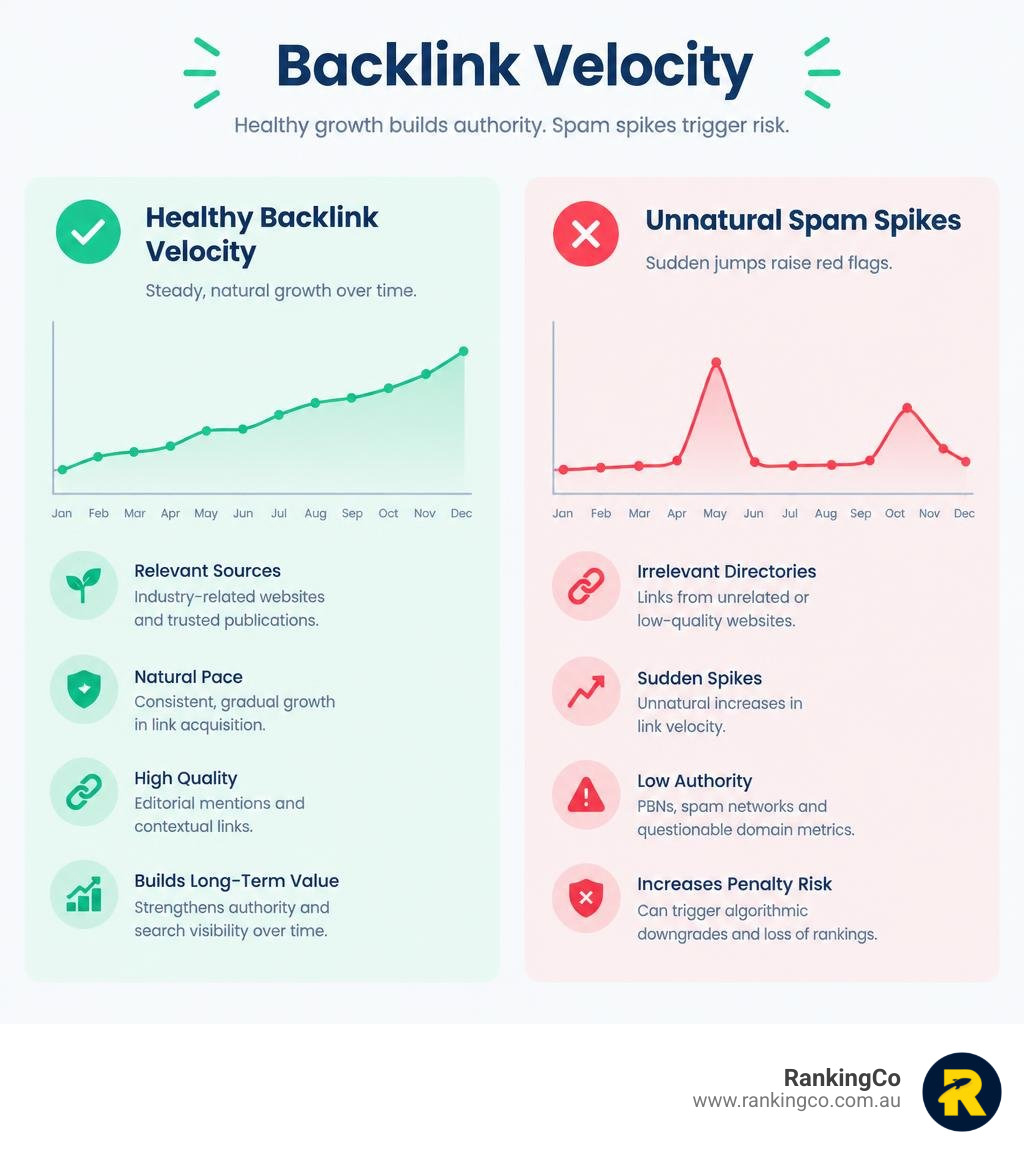
Backlinks and brand mentions can help search engines understand a website’s relevance and reputation, but volume alone is not a useful quality measure. Ask where links are coming from, whether the sources are relevant to your industry or community and why the agency believes a link or mention is worthwhile. A responsible agency should be able to discuss its approach without relying on vague promises or unexplained link totals.
Consider Local SEO Where It Fits the Business
Local SEO is most relevant when customers search for services in a particular area or when location influences the decision to contact or visit a business. In those cases, your agency should be able to discuss Google Business Profile management, accurate business information, reviews, location relevance and the performance of local service pages. The work should reflect your business model rather than follow the same template for every campaign.
For businesses that depend on location-based enquiries, our local SEO services can help connect technical, content and local search priorities into one practical plan.
Check Transparency, Ownership and Long-Term Accountability
A strong agency relationship should make it easier to understand what is happening with your marketing, not harder. Transparency means the agency can explain its priorities, the work completed, the limits of the available data and the decisions that will guide the next stage of the strategy.
Make Sure You Own Your Digital Assets
Your agency should manage your digital assets without becoming the gatekeeper to them. Your business should retain appropriate ownership or primary administrative access to the domain, website, hosting, analytics, Google Search Console, Google Business Profile, Tag Manager, advertising accounts and content created for the campaign.
Management access is normal and often necessary. The concern arises when an agency restricts access to the accounts or raw information needed to understand your performance, move providers or continue the work independently.
Understand What Your Agency Is Actually Doing
Ask for a clear explanation of what was completed, why it was prioritised, what changed, what the data suggests, who is responsible for the next steps and what happens when progress stalls. This provides a more practical basis for evaluating agency performance than simply reviewing a list of tasks.
A transparent agency should also be comfortable discussing uncertainty. SEO results vary with competition, website condition, resources, market demand and changes outside the agency’s control. Rather than relying on fixed promises, review the strategy at meaningful stages: establish reliable baselines and tracking, address material technical or content gaps, then assess search visibility, qualified traffic, conversions and new opportunities as evidence becomes available.
Evaluate SEO Based on Business Outcomes
Do not judge an SEO agency by how busy a campaign appears. Judge whether the strategy is transparent, technically sound, aligned with search intent and connected to meaningful business outcomes. At RankingCo, we combine practical reporting with accountable search strategy so you can make more informed marketing decisions.
- Explore our SEO services.
- See how our digital marketing services can support connected campaigns.
- Contact RankingCo to discuss your current SEO approach.
Frequently Asked Questions About Assessing SEO Agency Performance

How do I know if my SEO agency is doing a good job?
A good agency can show how its work connects to relevant search visibility, qualified traffic, organic conversions and agreed business priorities. It should explain the work completed, the reason it was prioritised, what the data shows and what it recommends next. Progress may not be linear, so look for a clear strategy and accountable decision-making rather than isolated ranking movements. Our SEO for startups guide offers further context on choosing the right agency.
What should an SEO agency report each month?
Monthly reporting should cover completed work, performance changes, insights, issues that need attention and the next priorities. The report should distinguish branded from non-branded search where relevant, explain how conversion tracking is working and connect important metrics to the pages, services or customer actions that matter to the business. You can also explore our guidance on evaluating SEO value.
How long should I give an SEO agency to show results?
SEO timelines vary according to the starting condition of the website, competition, available resources, the business model and the work required. Instead of expecting a fixed deadline, agree on sensible review stages that validate tracking, address priority issues and assess whether the strategy is building the right kind of search visibility and demand. Our guide to SEO investment in Queensland can help frame the resources behind that work.
What SEO metrics should a business owner track?
Track the measures that help you understand commercial value: relevant non-branded search visibility, qualified organic traffic, organic conversions, phone enquiries, quote requests and sales opportunities where the business can connect those outcomes to search. Rankings and impressions can still provide useful context, but they should not be the whole story.
Should I be concerned if my SEO agency owns my website or accounts?
Your agency can have the access needed to manage the work, but your business should retain ownership or primary administrative control of core digital assets and the information needed to operate independently. This includes the domain, website, hosting, analytics, Search Console, Google Business Profile, Tag Manager and campaign content. For related provider-selection guidance, see our hiring an SEO specialist resource.
How should an SEO agency approach AI search?
AI search does not replace the need for sound SEO foundations. Agencies should create clear, useful content that answers real questions, use logical information hierarchy, maintain accurate technical foundations and build credible topical signals. AEO and GEO can help guide the approach, but they should support an evidence-led SEO strategy rather than become a separate set of vague promises. Our RankingCo SEO services explain how we apply these foundations in practice.





Share online