Google Ads for Plumbers: How to Generate More Qualified Leads

Google Ads can help plumbing businesses appear when people are actively searching for help with issues such as blocked drains, burst pipes, hot water repairs, or planned installations. Plumbing is a local, service-led industry, so the ability to target searches based on the service a customer needs and the area a business serves can be particularly relevant. The most useful campaigns do more than generate visits. They connect a relevant search, a clear ad, a service-specific landing page, and reliable conversion tracking so the business can assess whether enquiries are turning into worthwhile jobs.
At RankingCo, we view paid search as part of a wider digital marketing strategy rather than an isolated source of clicks. For plumbers, that means focusing on the services and locations that matter, reducing irrelevant enquiries, and using reporting that supports clearer decisions about marketing activity.
Key Takeaways
- Google Ads can place a plumbing service in front of people actively looking for help, but lead quality matters more than click volume alone.
- Campaigns are often easier to manage when they are organised around the services offered and the intent behind each search.
- Negative keywords and regular Search Terms reviews can help reduce irrelevant traffic.
- Relevant landing pages, clear contact options, and call tracking help turn advertising activity into measurable enquiries.
- Google Ads Leads Management can support businesses that want a more structured approach to lead generation and reporting.
How Can Google Ads Help Plumbers Generate More Qualified Leads?
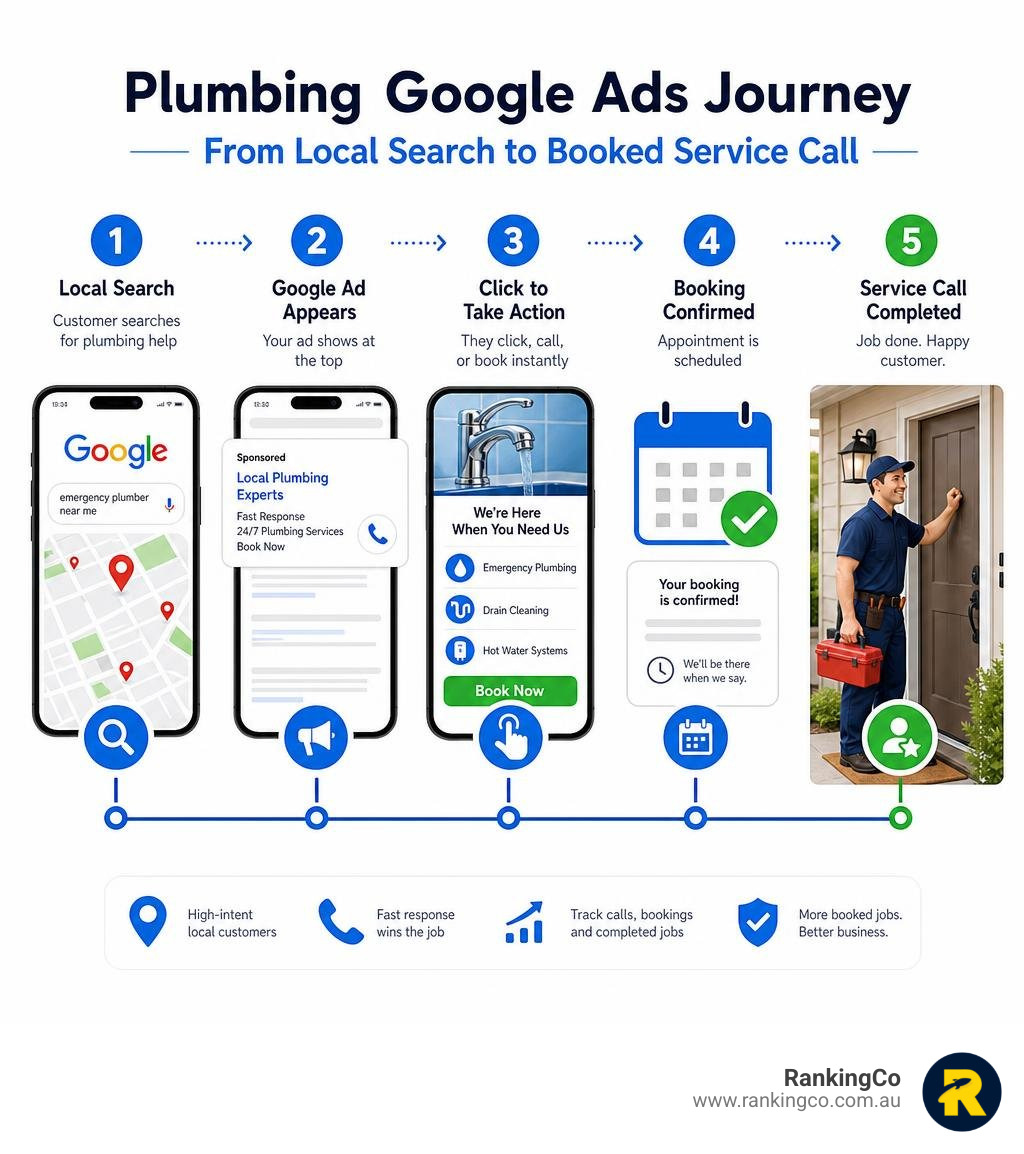
Google Ads can help plumbers generate leads by placing relevant services in front of people actively searching for plumbing help. The campaign needs to connect the search query, ad, landing page, and conversion tracking so the business can identify which enquiries are genuinely valuable.
Plumbing searches often show a clear and immediate need. Someone researching how to fix a tap is different from someone searching for an emergency plumber nearby, a blocked drain service, or a hot water repair. Someone searching for "how to fix a leaking tap" may be looking for information, while someone searching for "leaking tap plumber near me" is signalling a much clearer intent to contact a service provider. A well-managed campaign recognises that difference and focuses budget on searches that are more closely aligned with the services the business can provide.
Service-specific and location-based targeting can make ads more relevant to the person searching. Emergency work may need different messaging, contact options, and operating-hour considerations from planned maintenance or replacement work. The aim is not simply to appear for every plumbing-related search. It is to create a useful path from the search term to the right service, the right landing page, and an enquiry the team can respond to.
What Types of Plumbing Searches Can Google Ads Target?
Google Ads can target a range of service-focused plumbing searches, depending on what the business genuinely offers and the areas it serves. Relevant themes may include emergency plumber searches, blocked drain searches, hot water repair searches, leak detection, burst pipe repairs, and planned plumbing services such as installations or replacements. Commercial plumbing searches can also be relevant where the business provides those services.
Combining a specific service with a location can help a campaign reflect local intent without relying on a long, unfocused keyword list. For example, searches may include a service and suburb, city, or wider service area. The goal is to align the campaign with the problems the business is equipped to solve, then send each searcher to information and contact options that match that service.
Google Ads can support immediate visibility for priority services, while Search Engine Optimisation (SEO) helps build longer-term organic visibility. Both channels work best when they reflect the same services, locations, and customer needs.
What Makes a Plumbing Lead a Qualified Lead?
A qualified plumbing lead is more than an enquiry or phone call. It generally reflects a genuine need that the business is well placed to meet, so advertising activity can be assessed against the types of jobs the team wants and has capacity to handle.
A lead is more likely to be qualified when:
- the customer needs a service the business actually provides
- the customer is within the business's service area
- the enquiry is genuine and includes a realistic request for assistance
- the team has capacity to respond within an appropriate timeframe
- the job is commercially relevant to the business
These factors will vary between plumbing businesses. An emergency call, a planned hot water replacement, and a commercial maintenance enquiry can involve different response times, job values, and operational requirements. Defining what a qualified lead looks like before reviewing campaign performance helps the business focus on useful enquiries rather than treating every click or contact as equal.
How Should You Structure Google Ads for a Plumbing Business?
A practical account structure makes it easier to understand what is driving enquiries and where budget is being used. Rather than placing every service into one broad campaign, consider separating campaigns or ad groups around the services you actually offer and the intent behind the search.
Build Campaigns Around Plumbing Services
Depending on the business, this may include emergency plumbing, blocked drains, hot water repairs, hot water replacement, leak detection, burst pipes, commercial plumbing, or gas plumbing where that service is genuinely offered. These services can differ in urgency, job value, search behaviour, landing-page requirements, and the way a customer prefers to contact the business.
Separating services does not need to make an account unnecessarily complicated. It gives the campaign a clearer structure so ads and landing pages can better match the service a person is seeking. For example, a search for hot water repairs should lead to information about hot water repairs rather than a generic homepage.
Match Keywords to Real Customer Intent
Keyword choices should reflect the services, locations, and types of enquiries the plumbing business wants to receive. Exact Match and Phrase Match can be useful options when the goal is to maintain closer control over service-focused searches, but the appropriate mix depends on the account, available data, and the services offered.
Examples such as [emergency plumber near me]
or [hot water system replacement]
illustrate the principle of combining a service with clear customer intent. Location modifiers can also be relevant when the business serves defined suburbs, cities, or regions. Regularly reviewing the actual searches that triggered ads helps reveal whether the campaign is reaching likely customers or attracting unrelated traffic.
A plumbing business should also consider where it can realistically provide services. Depending on its operating model, this may mean targeting a defined city, suburb group, service radius, or broader regional area rather than treating an entire state as one audience. Phrases such as “plumber near me”, “emergency plumber”, “local plumber”, “plumber in [location]”, and “plumbing services [location]” can reflect local intent when they align with the services and areas the business genuinely covers.
Use Negative Keywords to Filter Irrelevant Searches
Negative keywords can help prevent ads from showing for searches that do not align with a plumbing business's commercial goals. Useful categories to review may include:
DIY and informational searches
- how to
- DIY
- tutorial
- diagram
Employment searches
- jobs
- apprenticeship
- careers
- salary
Parts and supply searches
- parts
- wholesale
- supplies
These examples are starting points rather than a fixed exclusion list. A search may be commercially relevant for one plumbing business and unsuitable for another. Decisions should be informed by the Search Terms report, the service area, and the services the business actually provides.
Write Ads Around the Customer's Immediate Need
A plumbing ad should make it easy for a potential customer to see that the service is relevant to their situation. Clear service references, local relevance, accurate trust signals, and a straightforward next step can all make the message easier to understand.
For an emergency service, the ad may focus on the type of problem and availability only where the business can genuinely respond. For a planned service, such as a hot water replacement, the ad can focus on the relevant service and how to request an assessment. Claims about licences, insurance, response times, pricing, or qualifications should always be accurate and supported by the business's actual offering.
Send Each Search to the Right Landing Page
The customer journey should be straightforward:
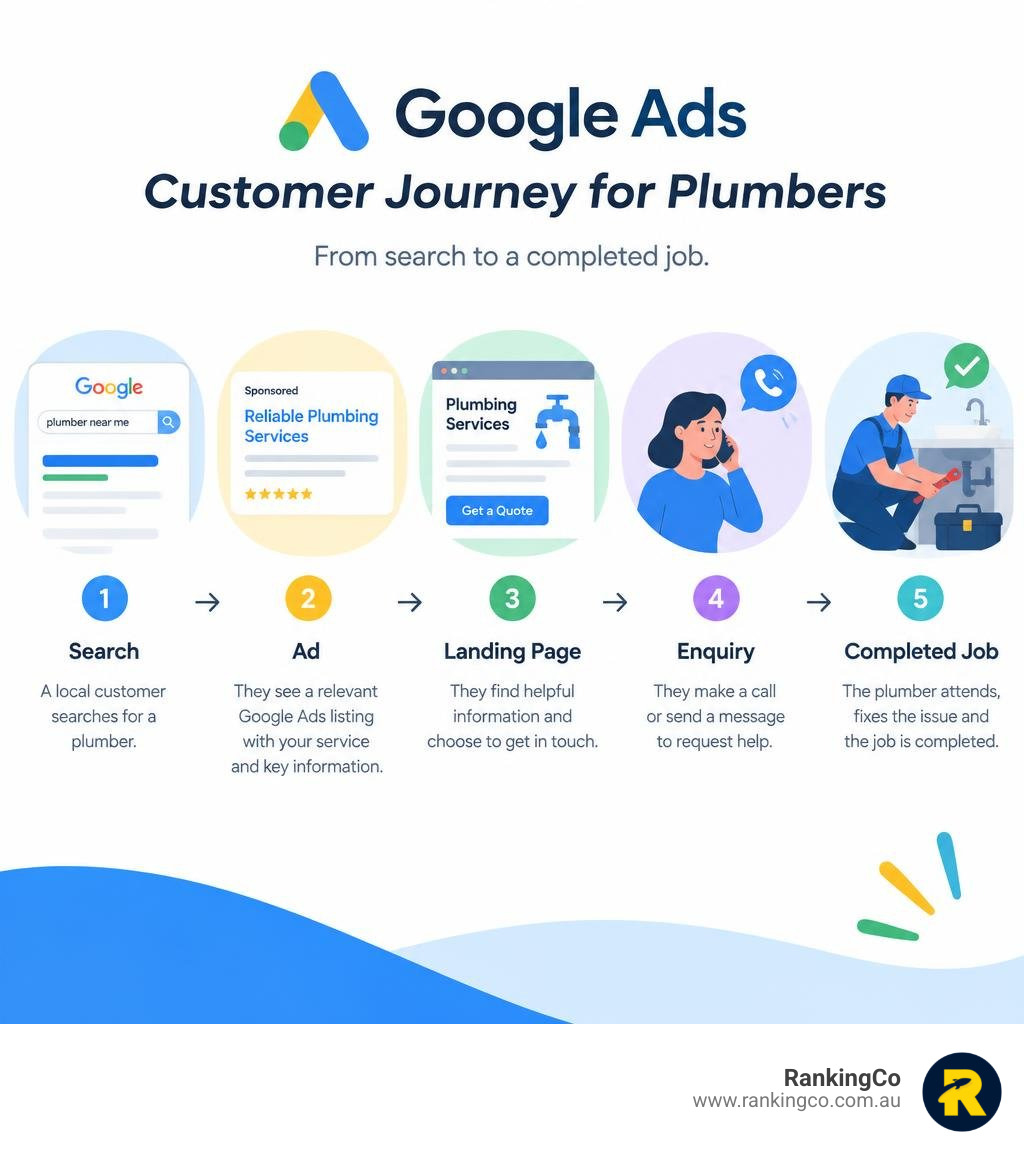
Someone searching for hot water repairs should ideally reach a page about hot water repairs, with clear service information, prominent contact options, relevant trust information, and a simple next step. The same principle applies to blocked drains, emergency repairs, and other priority services.
Mobile usability matters because many local service searches happen when the customer needs help quickly. A focused Landing Pages strategy can help ensure the page reflects the promise made in the ad and makes it easier for visitors to call or enquire.
How Do You Turn Plumbing Google Ads Clicks Into Booked Jobs?
Clicks are an early signal, not the final outcome. A campaign may attract traffic without producing enquiries that suit the business, which is why measurement should extend beyond visits and Click-through rate (CTR).
Track More Than Clicks
Useful conversion signals can include phone calls, form enquiries, booking requests, qualified leads, completed jobs, and revenue where reliable tracking is available. The right set of conversions depends on the business model and systems in place.
Tracking should help answer practical questions: Which services generate enquiries? Which campaigns lead to calls that are answered? Which leads are suitable for the service area and team capacity? This makes it easier to evaluate advertising activity against real business outcomes rather than relying on clicks alone.

Track Phone Calls Properly
For many plumbing businesses, phone calls are a central source of new enquiries. Call tracking can help identify calls generated by advertising and distinguish meaningful service enquiries from accidental or very short calls. Dynamic Number Insertion is one approach that can display a tracking number based on the visitor's advertising source, where the website and tracking setup support it.
The purpose is not to add complexity for its own sake. It is to connect the call with the marketing activity that prompted it and, where possible, with what happened after the conversation.
Connect Leads With What Happens After the Enquiry
A useful reporting path is:
Ad → enquiry → qualification → booking → completed job
A customer relationship management system or job-management platform can support this process where it fits the business's workflow. Connecting advertising data with later sales outcomes may provide a clearer picture of lead quality, although the value of any reporting depends on consistent data entry and a reliable tracking setup.
Adjust Campaigns Around Real Business Capacity
Campaign settings should reflect the business's operating reality. Consider opening hours, emergency availability, technician capacity, geographic service areas, and periods when the team cannot accept additional work. If calls cannot be answered or jobs cannot be attended promptly, more advertising activity may not produce a better customer experience.
What Should Plumbers Look For When Managing Google Ads?
Effective campaign management involves regular review and considered adjustments rather than treating the account as set-and-forget.
Regular Search Term Reviews
Search Terms reviews can help identify irrelevant queries, new service themes, poor-quality traffic, and potential negative keywords. They can also reveal language customers use when looking for a service, which may inform future keyword and ad-copy decisions.
Review Conversion Quality, Not Just Volume
A campaign producing a high number of enquiries is not necessarily producing the right enquiries. Review whether people are contacting the business about services it actually provides, whether they are within the service area, whether calls are answered, whether leads become booked jobs, and which services generate worthwhile enquiries.
This review supports more informed decisions about targeting, landing pages, and budget allocation without assuming that one metric tells the whole story.
Use Automated Bidding Carefully
Automated bidding is designed to help Google Ads optimise towards the selected campaign goal using available signals and conversion data. The most appropriate approach depends on the campaign objective, account history, tracking reliability, and the quality of conversions being recorded.
Before relying heavily on automated optimisation, make sure conversion tracking reflects meaningful actions. If low-quality actions are treated as the main success signal, the campaign may optimise towards more of those actions rather than the enquiries the business values most.
Where Google Local Services Ads Fit
Google Local Services Ads and Google Search Ads are different ways to reach people looking for local services. Local Services Ads have their own availability, eligibility, screening, and payment requirements, while Search Ads provide more direct control over keywords, ad copy, and landing-page destinations. Google's Local Services Ads Help documentation is the appropriate source to check for current requirements before making decisions, as platform features and eligibility can change.
RankingCo helps Australian small and medium-sized businesses manage Google Ads with a focus on strategy, targeting, conversion tracking, and transparent reporting. As a Google Premier Partner, we combine platform knowledge with broader digital marketing expertise to help businesses understand how paid search fits into their wider growth strategy.
Effective plumbing Google Ads management connects service-focused targeting, relevant ads, useful landing pages, and meaningful conversion data. For support tailored to your goals, explore our Google Ads Leads Management service, view Our Services, or contact RankingCo to discuss your next steps.
Frequently Asked Questions About Google Ads for Plumbers
How Much Does Google Ads Cost for a Plumbing Business?
There is no universal cost for Google Ads because spend and lead costs can vary with location, competition, services promoted, targeting choices, landing-page relevance, and campaign settings. A useful budget should be considered alongside the business's capacity to handle enquiries and the quality of conversions being tracked.
How Much Should a Plumber Spend on Google Ads?
There is no single budget that suits every plumbing business. A suitable level of spend should be considered in relation to the service area, local competition, search demand, the commercial value of the jobs being promoted, conversion performance, and the team's capacity to respond to enquiries. Starting with a focused campaign around priority services can make it easier to assess lead quality before making larger budget decisions.
Are Google Ads Worth It for Plumbers?
Google Ads may be useful when there is relevant search demand, clear service targeting, a suitable landing page, reliable conversion tracking, and a process for responding to enquiries. Whether it is worthwhile depends on the business's services, local competition, budget, team capacity, and ability to assess lead quality.
What Keywords Should Plumbers Use in Google Ads?
Keywords should usually reflect the services offered, the locations served, and the intent behind the search. A plumbing business may consider service-and-location combinations, emergency terms where emergency work is genuinely available, and planned-service terms where they match the business offering. The best keyword set will differ between businesses, so it should be reviewed against real Search Terms data.
How Do Plumbers Stop Google Ads From Attracting Irrelevant Clicks?
Plumbers can reduce irrelevant traffic by reviewing Search Terms, adding appropriate negative keywords, targeting the areas they actually serve, and keeping ads focused on specific services. Negative keywords should be chosen carefully so the campaign does not unintentionally exclude searches that could still lead to valuable enquiries.
What is the best Google Ads strategy for a plumbing business?
There isn't one Google Ads strategy that suits every plumbing business. A suitable approach usually starts with the services offered, service area, search intent, conversion tracking and the business's capacity to respond to enquiries.
Should Plumbers Use Google Local Services Ads or Google Search Ads?
The appropriate option depends on the business's goals, service area, eligibility, and preferred level of campaign control. Google Local Services Ads operate within Google's local-services programme and have their own requirements, while Google Search Ads allow more control over keywords, ad messaging, and landing pages. Some businesses may evaluate both as part of their wider advertising strategy.
How Can Plumbers Track Whether Google Ads Generate Actual Jobs?
Businesses can track form enquiries, calls, booking requests, qualified leads, and completed jobs where their systems allow it. Call tracking and website conversion tracking can connect enquiries to the ads that generated them, while customer relationship management or job-management systems may help link marketing activity to later booking and job outcomes.




Share online