Mastering Online Lead Generation: Your Guide to Converting Prospects
Why Your Business Needs a Stream of Quality Leads

Effective online lead generation is the process of attracting and converting potential customers through digital channels. It turns website visitors into qualified prospects who are ready to buy by combining smart content, targeted advertising, and data-driven tactics to build a consistent pipeline of opportunities.
Quick Answer: The 5 Essential Steps for Effective Online Lead Generation
- Understand Your Audience - Build detailed buyer personas and map their journey.
- Create Valuable Content - Offer resources (blogs, eBooks, webinars) that solve real problems.
- Optimise for Visibility - Use SEO and paid ads to get found by ready-to-buy customers.
- Capture & Nurture Leads - Deploy smart forms, CTAs, and personalised email sequences.
- Measure & Improve - Track conversion rates, cost per lead, and ROI to refine your strategy.
Struggling to attract the right prospects? You're not alone. According to HubSpot, 61% of marketers say generating leads is their biggest challenge. It's frustrating when your site gets traffic, but no one fills out a contact form.
In today's digital-first world, buyers research online long before they talk to sales. If your business isn't showing up at the right time with the right message, you're leaving money on the table. The good news is that with the right strategies, you can build a lead generation machine that works around the clock to attract and nurture qualified prospects.
I'm Kerry Anderson, co-founder of RankingCo, and I've spent over 15 years helping businesses build scalable, effective online lead generation systems that drive real growth. My focus is on turning digital strategy into measurable results—more traffic, better leads, and higher conversions.
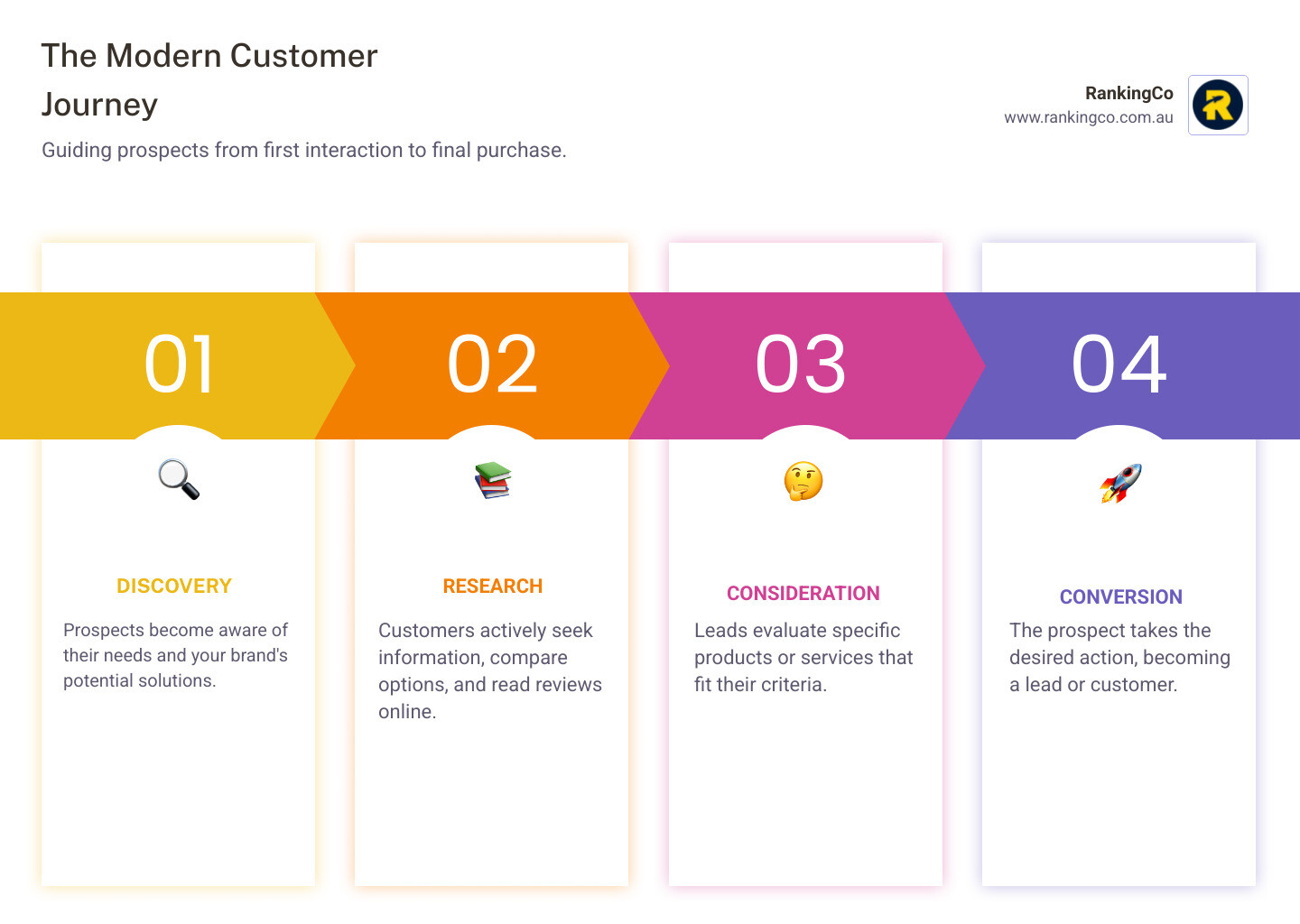
The Blueprint for Effective Online Lead Generation
Understanding the Fundamentals: Leads, Funnels, and Personas
Before diving into the "how," let's clarify the basic building blocks of lead generation. This sets the stage for everything else.
What is a lead?
A lead is anyone who expresses interest in your company's products or services by providing their contact information, like an email address. They've raised their hand, signalling they're interested in what you offer.
Traditional vs. online lead generation
Traditional methods like cold calling cast a wide, often unsolicited, net. In contrast, effective online lead generation is targeted and permission-based, using digital channels to draw people in with value rather than pushing messages out blindly.
Types of leads
Not all leads are created equal. Understanding their qualification helps prioritise your efforts.
- Lead Temperature: Leads can be cold (minimal interest), warm (engaged but need more info), or hot (showing clear buying intent and ready for a sales conversation).
- Marketing Qualified Leads (MQL): An MQL has engaged with your marketing and fits your target profile, making them more likely to become a customer.
- Sales Qualified Leads (SQL): An SQL has been vetted by the sales team and is deemed ready for a direct sales conversation.
- B2B vs. B2C leads: B2B (business-to-business) lead generation often involves longer sales cycles and multiple decision-makers, while B2C (business-to-consumer) is typically faster and more focused on individual needs.
Buyer personas
A buyer persona is a semi-fictional representation of your ideal customer, based on market research and real data. Understanding your personas is crucial for tailoring your content, messaging, and channels for maximum impact.
Lead generation funnel
The lead generation funnel represents a person's journey from first awareness to final purchase. A surprising 68% of companies haven't identified their funnel, meaning they're likely missing opportunities.
- TOFU (Top of Funnel): Awareness: Attract potential customers with valuable, educational content.
- MOFU (Middle of Funnel): Consideration: Prospects are researching solutions. Provide in-depth content to build trust.
- BOFU (Bottom of Funnel): Decision: Prospects are ready to choose. Offer content like case studies or free trials to help them convert.

Key questions to ask when building a buyer persona:
- What are their demographics (age, location, job title)?
- What are their goals and challenges?
- Where do they get information online?
- What motivates them to make a purchase?
- What are their common objections?
Core Strategies for an Effective Online Lead Generation Machine
Now, let's explore the powerful strategies that form the backbone of an effective online lead generation system.
Content marketing
Content marketing builds trust by creating and distributing valuable, relevant content.
- Blog posts: Answer your audience's real questions and address their pain points.
- Gated content (eBooks, checklists): Offer downloadable resources in exchange for contact information to capture leads.
SEO
Search Engine Optimisation (SEO) improves your website's visibility in search results, which is crucial since 70% of the buyer's journey happens digitally.
- Keyword research: Identify the terms your target audience uses to search for solutions.
- Onsite SEO: Optimise your website's pages, titles, and content for these keywords.
- Optimising for search intent: Tailor your content to match why someone is searching.
Google Ads
Google Ads places targeted ads at the top of search results, reaching customers when they have high buying intent.
- Targeted campaigns: Reach ready-to-buy customers by targeting specific keywords, locations (like Brisbane, Sydney, or Melbourne), and demographics.
Social media marketing
Social media is a powerful tool for building brand awareness and generating leads.
- Build trust: Share valuable content and interact with your audience to establish authority.
- LinkedIn for B2B, Facebook/Instagram for B2C: Use LinkedIn for professional audiences and platforms like Facebook and Instagram for consumer-focused marketing.
Email marketing
Email remains a high-ROI channel for lead nurturing.
- Personalised follow-ups: Send custom messages based on a lead's interests and behaviour.
- Segmented lists: Group your audience to send highly relevant content, improving open rates.
Webinars and online events
Webinars are fantastic for sharing expertise and capturing high-quality leads through direct engagement.
- Educate and engage: Host free educational webinars on topics relevant to your ideal clients.
Website optimisation
Your website is your 24/7 salesperson and must be a lead-generating machine.
- Fast, mobile-friendly design: Your site must be fast and responsive on all devices.
- Clear landing pages: Use dedicated pages with a single purpose: to convert visitors into leads.
- Strong Calls-to-Action (CTAs): Use compelling buttons that tell visitors exactly what to do next.
- Lead capture forms and site chat: Use short forms and conversational chat to capture leads effectively.

From First Contact to Conversion: Nurturing and Scoring
Attracting leads is only half the battle. You need a system to guide them through their journey.
Lead nurturing
Lead nurturing is the process of building relationships with prospects who aren't ready to buy immediately.
- Personalised content: Send custom emails and content that address their specific needs.
- Segmentation: Divide leads into groups to send more relevant information.
- Marketing automation: Use tools to automate email sequences and follow-ups, saving time.
Lead scoring
Lead scoring ranks prospects by assigning points based on their actions (like downloads or page visits), helping your sales team focus on the hottest leads.
- Assign points based on actions: A lead gains points for engaging with your content or website.
- Prioritise leads for sales: This ensures your sales team focuses on prospects most likely to convert.
Sales and marketing alignment
For lead generation to succeed, your sales and marketing teams must be on the same page, sharing data, goals, and a clear definition of a qualified lead.
- Share data and goals: Ensure both teams work towards the same objectives.
- Use a CRM: A Customer Relationship Management (CRM) platform provides a central place to track every interaction.

Measuring Success and Avoiding Common Pitfalls
How do you know if your lead generation machine is working? Measurement and continuous improvement are key.
Key metrics
- Conversion Rate: The percentage of visitors who complete a desired action.
- Cost Per Lead (CPL): How much it costs to acquire one lead.
- Customer Acquisition Cost (CAC): The total cost to acquire a paying customer.
- Return on Investment (ROI): Whether your efforts bring in more revenue than they cost.
Analytics tools
- Google Analytics: Track website performance, user behaviour, and traffic sources.
- A/B testing: Continuously test different versions of your landing pages, CTAs, and emails.
Common mistakes
- Ignoring mobile users: A non-responsive website is a huge missed opportunity.
- Inconsistent messaging: Ensure your brand voice is consistent across all channels.
- Not tracking results: If you're not measuring, you're guessing.

| Common Lead Generation Mistake | Simple Solution |
|---|---|
| Too many form fields | Only ask for essential information. Fewer fields often lead to higher conversions. |
| Generic Calls-to-Action (CTAs) | Personalise your CTAs based on user behaviour. "Download the Guide" works better than "Click Here." |
| Slow or non-mobile website | Invest in a fast, responsive website design and test it on various devices. |
| No lead nurturing strategy | Implement automated email sequences to educate and build trust over time. |
| Sending all leads to sales | Qualify leads first using lead scoring. Sales teams are more efficient focusing on ready prospects. |
| Ignoring analytics | Regularly review your data in Google Analytics to understand what's working and optimise your efforts. |
| Annoying pop-ups | Use pop-ups sparingly and strategically, perhaps with exit-intent technology. |
| Lack of buyer persona understanding | Invest time in creating detailed buyer personas to ensure your messaging resonates. |
| Inconsistent content creation | Develop a sustainable content calendar to keep your audience engaged. |
| Poor sales and marketing alignment | Foster open communication and shared goals between your sales and marketing teams. |
Get Expert Help and Watch Your Business Grow
We've covered a lot, from understanding leads to implementing core strategies. Effective online lead generation is a journey of understanding your audience, using the right tactics, and constantly improving based on data.
A holistic approach works best—combining content, SEO, paid ads, and smart follow-ups. This integrated strategy ensures you're visible and engaging at every stage of your customer's journey. AI and marketing automation are also changing the game, making it easier to personalise and scale your efforts.
At RankingCo, we like to think of ourselves as the world’s best little digital agency. We're a Brisbane-based company with global reach, helping startups and scaling businesses grow across Australia, New Zealand, the US, and Canada. We offer full-funnel marketing services, including:
- Comprehensive Leads SEO strategies.
- Targeted Google Ads Management in Brisbane, Sydney, and Melbourne.
- Digital Marketing Services in Brisbane and other major cities.
- Advanced solutions like Microsoft Leads Ads Management.
We're passionate about helping businesses like yours thrive online. Ready to get more leads, convert more prospects, and see your business grow?
Get more traffic or Contact Us to start your journey today.



Share online